
South America Gateway: Trade Investments and opportunities in Brazil
Complementarities between Australian and Brazilian economies, business and Industry are found in many areas including information technology, renewable energy, agribusiness, mining and education sectors.
Join us for this informative seminar on how to do business with Brazil, hosted by the ABCC with BSI bringing experts such as Roger Frankel (Honorary Consul of Brazil in Victoria), Candida Costa (BSI South America Gateway),Cristina Talacko (President of the Australia Brazil Chamber of Commerce), Leith Wale (Regional Director of the ABCC) Bernard Baxter (Sec/Treasurer for United Dairy Farmers Victoria Branch) and Edward Munks (Karoon Gas).
Details are:
Date: September 8th
Time: 12:15 to 2pm
Venue: Ground floor, Innovation Building, 1010 Latrobe St, Docklands, Melbourne
New Members:
The ABCC welcomes Hopgood Ganin Lawyers from Brisbane and J Bay Marketing from Adelaide
Sunday, 31 August 2008
ABCC Highlight: Australian and Brazilian Foreign Ministers plan enhanced cooperation
August 29/2008
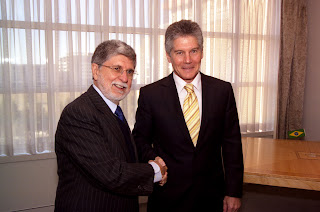
The Australian government welcomed the official visit to Australia by the Brazilian Minister for External Relations, HE Mr Celso Amorim on 26-28 August 2009. The visit was the first by a Brazilian Minister to Australia since the election of the Rudd government and the second by Mr Amorim to Australia as Minister for External Relations.
Mr Amorim was hosted by the Australian Minister for Foreign Affairs, the Hon Stephen Smith, and the Minister for Trade, the Hon Simon Crean. He also met with the Prime Minister, the Hon Kevin Rudd.
The Ministers reviewed the bilateral relationship and exchanged views on multilateral issues, including reviving the World Trade Organization (WTO) Doha Round negotiations, climate change, United Nations reform and developments in East Timor.
The Ministers agreed that bilateral relations between Australia and Brazil should be enhanced to reflect the growing interest in the broadening and deepening engagement between government, business and the peoples of the two nations. To this end, the Ministers will work together to raise the level of engagement and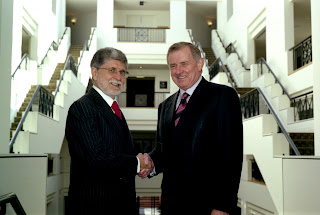 cooperation between Australia and Brazil.
As a first step, they will develop a plan of action to raise the bilateral relationship to an enhanced partnership for consideration by their Prime Minister and President respectively. In that regard the ministers highlighted the intention of Prime Minister Rudd and President Lula to exchange visits.
The Ministers agreed that they would instruct their officials to commence immediately the task of identifying elements of the plan of action which will explore cooperation in trade and investment, agriculture, mining, energy, science and technology, education, sport, culture and other people to people links. The important role of business and civil society in ensuring the success of this process was underlined.
The ministers also acknowledged Brazil's commitment to regional integration in South America and Australia's in the Asia-Pacific region. They agreed to work together to promote stronger links between the two regions.
The action plan will also seek to build existing cooperation in multilateral fora, including the United Nations and the World Trade Organization.
Mr Amorim invited both Mr Smith and Mr Crean to visit Brazil. Both ministers accepted the invitation and are considering dates.
Source

The Australian government welcomed the official visit to Australia by the Brazilian Minister for External Relations, HE Mr Celso Amorim on 26-28 August 2009. The visit was the first by a Brazilian Minister to Australia since the election of the Rudd government and the second by Mr Amorim to Australia as Minister for External Relations.
Mr Amorim was hosted by the Australian Minister for Foreign Affairs, the Hon Stephen Smith, and the Minister for Trade, the Hon Simon Crean. He also met with the Prime Minister, the Hon Kevin Rudd.
The Ministers reviewed the bilateral relationship and exchanged views on multilateral issues, including reviving the World Trade Organization (WTO) Doha Round negotiations, climate change, United Nations reform and developments in East Timor.
The Ministers agreed that bilateral relations between Australia and Brazil should be enhanced to reflect the growing interest in the broadening and deepening engagement between government, business and the peoples of the two nations. To this end, the Ministers will work together to raise the level of engagement and
 cooperation between Australia and Brazil.
As a first step, they will develop a plan of action to raise the bilateral relationship to an enhanced partnership for consideration by their Prime Minister and President respectively. In that regard the ministers highlighted the intention of Prime Minister Rudd and President Lula to exchange visits.
The Ministers agreed that they would instruct their officials to commence immediately the task of identifying elements of the plan of action which will explore cooperation in trade and investment, agriculture, mining, energy, science and technology, education, sport, culture and other people to people links. The important role of business and civil society in ensuring the success of this process was underlined.
The ministers also acknowledged Brazil's commitment to regional integration in South America and Australia's in the Asia-Pacific region. They agreed to work together to promote stronger links between the two regions.
The action plan will also seek to build existing cooperation in multilateral fora, including the United Nations and the World Trade Organization.
Mr Amorim invited both Mr Smith and Mr Crean to visit Brazil. Both ministers accepted the invitation and are considering dates.
Source

Trade: Australia and Brazil back urgent return to WTO talks
August 27/2008
Brazil and Australia have backed an urgent resumption of stalled world trade talks before the U.S. presidential election and said on Wednesday they hoped a breakthrough could still be reached.
The so-called Doha round of negotiations to slash trade barriers and farm subsidies collapsed late last month after the United States and India failed to agree on a proposal to help poor farmers deal with large-scale food imports.
U.S. Trade Representative Susan Schwab has since proposed a meeting of senior trade officials in September to see if it is still possible to reach a global deal to free up world trade.
"I'm still hopeful that we can still make an effort, but it has to be very fast," Brazil's Foreign Minister Celso Amorim told reporters in Canberra after talks with Australian counterpart Stephen Smith.
A joint statement from Amorim and Australia's Trade Minister Simon Crean said both countries would work to revive the talks before the U.S. presidential election in November.
"Based on past experience, there are two possibilities. We either do it now, in September, or we will have to wait for a long time," Amorim told reporters.
The Doha round of talks began in the Qatari capital almost seven years ago.
Brazil and Australia were among the seven key nations involved in the last World Trade Organisation (WTO) negotiations, and both are members of the so-called Cairns group of agricultural exporting nations who want Europe and the United States to lower farm subsidies. Brazil has also taken WTO action against the United States over U.S. subsidies to cotton farmers, with Amorim on Wednesday saying his country would be seeking "billions" in damages.
"We are still in the process of making our precise calculations to ask the (WTO) arbitration panel. But it is certainly very high, because the harm the subsidies cause is very big. It is something certainly in the area of billions," he said.
He said the cotton subsidies harmed many small, poor African countries and should be eliminated.
Source
Brazil and Australia have backed an urgent resumption of stalled world trade talks before the U.S. presidential election and said on Wednesday they hoped a breakthrough could still be reached.
The so-called Doha round of negotiations to slash trade barriers and farm subsidies collapsed late last month after the United States and India failed to agree on a proposal to help poor farmers deal with large-scale food imports.
U.S. Trade Representative Susan Schwab has since proposed a meeting of senior trade officials in September to see if it is still possible to reach a global deal to free up world trade.
"I'm still hopeful that we can still make an effort, but it has to be very fast," Brazil's Foreign Minister Celso Amorim told reporters in Canberra after talks with Australian counterpart Stephen Smith.
A joint statement from Amorim and Australia's Trade Minister Simon Crean said both countries would work to revive the talks before the U.S. presidential election in November.
"Based on past experience, there are two possibilities. We either do it now, in September, or we will have to wait for a long time," Amorim told reporters.
The Doha round of talks began in the Qatari capital almost seven years ago.
Brazil and Australia were among the seven key nations involved in the last World Trade Organisation (WTO) negotiations, and both are members of the so-called Cairns group of agricultural exporting nations who want Europe and the United States to lower farm subsidies. Brazil has also taken WTO action against the United States over U.S. subsidies to cotton farmers, with Amorim on Wednesday saying his country would be seeking "billions" in damages.
"We are still in the process of making our precise calculations to ask the (WTO) arbitration panel. But it is certainly very high, because the harm the subsidies cause is very big. It is something certainly in the area of billions," he said.
He said the cotton subsidies harmed many small, poor African countries and should be eliminated.
Source
Economy: Brazil Expecting Close to US$ 1.5 Trillion in Investments Up to 2011
August 31/2008
Private and public investment in dynamic sectors of the Brazilian economy should grow 18% a year between 2008 and 2011. The forecast was made by the president of the BNDES (Banco Nacional de Desenvolvimento Econômico e Social - National Economic and Social Development Bank, Luciano Coutinho. Coutinho was making a presentation, August 28, during the meeting of the Council of Social and Economic Development, at Planalto Palace, seat of the government of Brazil when he talked about the subject. According to Coutinho, total investment between 2008 and 2011 should reach 2.367 trillion Brazilian reais (US$ 1.456 trillion). Of these, 1.511 trillion reais (US$ 929 billion) is already mapped in a trustworthy manner. For comparison purposes, investment between 2004 and 2007 was presented, totaling 1.554 trillion reais (US$ 949 billion). Considering forecasts, from 2008 to 2011, investment in industry and services should reach 627 billion reais (US$ 386 billion), in infrastructure, 304 billion reais (US$ 187 billion), in civil construction, 534 billion reais (US$ 328 billion) and in livestock farming, 45 billion reais (US$ 28 billion). Coutinho estimates that the rate of investment should reach 21% of the Gross Domestic Product (GDP) in 2010. "We are going to reach the end of this year with at least 18% of the GDP [the sum of all that is produced in the country] in investment, and 21% by 2010," stated the BNDES president. Coutinho even hopes to exceed this figure. In the presentation, to an audience of businessmen in several sectors, ministers of State and parliament members, the BNDES president showed the forecast for growth of the infrastructure sector and of others, like the vehicle, food, textile and health sectors. According to forecasts by the bank, the sector to receive the greatest investment should be oil and gas, estimated at 269.7 billion reais (US$ 166 billion) in the period from 2008 to 2011, against 147.2 billion (US$ 91 billion) in the previous four-year period. That is not including the pre-salt sector. Then comes the mining sector, with 80 billion reais (US$ 49 billion) from 2008 to 2011, against 47 billion reais (US$ 29billion) between 2004 and 2007, and ironworks, which should grow 26% a year between 2008 and 2011.
In the same period, the naval industry should receive investment of 36 billion reais (US$ 22 billion), whereas between 2004 and 2007 investment was just 4.5 billion reais (US$ 2.8 billion). All dollar figures are calculated using current exchange rates for comparison purposes.
Source
Private and public investment in dynamic sectors of the Brazilian economy should grow 18% a year between 2008 and 2011. The forecast was made by the president of the BNDES (Banco Nacional de Desenvolvimento Econômico e Social - National Economic and Social Development Bank, Luciano Coutinho. Coutinho was making a presentation, August 28, during the meeting of the Council of Social and Economic Development, at Planalto Palace, seat of the government of Brazil when he talked about the subject. According to Coutinho, total investment between 2008 and 2011 should reach 2.367 trillion Brazilian reais (US$ 1.456 trillion). Of these, 1.511 trillion reais (US$ 929 billion) is already mapped in a trustworthy manner. For comparison purposes, investment between 2004 and 2007 was presented, totaling 1.554 trillion reais (US$ 949 billion). Considering forecasts, from 2008 to 2011, investment in industry and services should reach 627 billion reais (US$ 386 billion), in infrastructure, 304 billion reais (US$ 187 billion), in civil construction, 534 billion reais (US$ 328 billion) and in livestock farming, 45 billion reais (US$ 28 billion). Coutinho estimates that the rate of investment should reach 21% of the Gross Domestic Product (GDP) in 2010. "We are going to reach the end of this year with at least 18% of the GDP [the sum of all that is produced in the country] in investment, and 21% by 2010," stated the BNDES president. Coutinho even hopes to exceed this figure. In the presentation, to an audience of businessmen in several sectors, ministers of State and parliament members, the BNDES president showed the forecast for growth of the infrastructure sector and of others, like the vehicle, food, textile and health sectors. According to forecasts by the bank, the sector to receive the greatest investment should be oil and gas, estimated at 269.7 billion reais (US$ 166 billion) in the period from 2008 to 2011, against 147.2 billion (US$ 91 billion) in the previous four-year period. That is not including the pre-salt sector. Then comes the mining sector, with 80 billion reais (US$ 49 billion) from 2008 to 2011, against 47 billion reais (US$ 29billion) between 2004 and 2007, and ironworks, which should grow 26% a year between 2008 and 2011.
In the same period, the naval industry should receive investment of 36 billion reais (US$ 22 billion), whereas between 2004 and 2007 investment was just 4.5 billion reais (US$ 2.8 billion). All dollar figures are calculated using current exchange rates for comparison purposes.
Source
Economy: Brazil Anticipating US$ 35 Billion in Foreign Direct Investment This Year
August 24/2008

According to the projection of the Central Bank of Brazil, the country should receive US$ 35 billion in FDI in the whole of 2008. Foreign direct investment (FDI) inflow into Brazil reached US$ 3.24 billion in July, and totaled US$ 19.942 billion in the first seven months this year.
Figures disclosed last week by the Central Bank show that investment inflow in the corresponding periods last year was higher. In July, the total was US$ 3.613 billion, and the accumulated result from January to July 2007 was US$ 24.466 billion.
The sectors that received the most foreign direct investment this year were metallurgy (17.2%), financial services (14.8%) and mineral extraction (8.7%). The head of the Economic Department at the Central Bank, Altamir Lopes, also highlighted the sectors of real estate activities and construction of buildings, which are indicators of rising FDI shares, even though they do not receive the bulk of this type of investment. These segments answered to 4.6% and 4.2% of FDI inflow, respectively.
The current account balance (all transactions between Brazil and foreign countries) from January to July showed a deficit of US$ 19.512 billion, the highest value ever recorded during the period since the beginning of the Central Bank's historical series, in 1947. In the last 12-month period the deficit was US$ 19.94 billion, the highest for the period since March 2002. In July, the deficit of US$ 2.111 billion was the highest for the month since 1997.
According to Lopes, the reasons for the result in July were the increase in remittances of profits and dividends from branches of companies to their head offices abroad, heightening of interest payments, typical of the month of July, and expansion of the international travel account deficit.
To Lopes, the current account deficit should slowdown. The forecast is for the negative result to decrease to US$ 1 billion in August. "Should the result prove true, then we will have a reduction in net payments of services, profits and dividends, and the trade balance will behave well," he asserted.
The head at the Economic Department of the Central Bank of Brazil underscored the fact that the current account deficit is going to be financed by FDI, which is characterized by a lasting interest from investors in the enterprise at hand.
In August, up until last Thursday (21), direct investment inflow totaled US$ 4.5 billion, driven by an operation in the mining sector. The Central Bank expects to close the month at US$ 5.2 billion.
Source

According to the projection of the Central Bank of Brazil, the country should receive US$ 35 billion in FDI in the whole of 2008. Foreign direct investment (FDI) inflow into Brazil reached US$ 3.24 billion in July, and totaled US$ 19.942 billion in the first seven months this year.
Figures disclosed last week by the Central Bank show that investment inflow in the corresponding periods last year was higher. In July, the total was US$ 3.613 billion, and the accumulated result from January to July 2007 was US$ 24.466 billion.
The sectors that received the most foreign direct investment this year were metallurgy (17.2%), financial services (14.8%) and mineral extraction (8.7%). The head of the Economic Department at the Central Bank, Altamir Lopes, also highlighted the sectors of real estate activities and construction of buildings, which are indicators of rising FDI shares, even though they do not receive the bulk of this type of investment. These segments answered to 4.6% and 4.2% of FDI inflow, respectively.
The current account balance (all transactions between Brazil and foreign countries) from January to July showed a deficit of US$ 19.512 billion, the highest value ever recorded during the period since the beginning of the Central Bank's historical series, in 1947. In the last 12-month period the deficit was US$ 19.94 billion, the highest for the period since March 2002. In July, the deficit of US$ 2.111 billion was the highest for the month since 1997.
According to Lopes, the reasons for the result in July were the increase in remittances of profits and dividends from branches of companies to their head offices abroad, heightening of interest payments, typical of the month of July, and expansion of the international travel account deficit.
To Lopes, the current account deficit should slowdown. The forecast is for the negative result to decrease to US$ 1 billion in August. "Should the result prove true, then we will have a reduction in net payments of services, profits and dividends, and the trade balance will behave well," he asserted.
The head at the Economic Department of the Central Bank of Brazil underscored the fact that the current account deficit is going to be financed by FDI, which is characterized by a lasting interest from investors in the enterprise at hand.
In August, up until last Thursday (21), direct investment inflow totaled US$ 4.5 billion, driven by an operation in the mining sector. The Central Bank expects to close the month at US$ 5.2 billion.
Source
Economy: Meirelles Sees Brazil Inflation Slowing to 4.5%
August 29/2008
Brazilian central bank President Henrique Meirelles said he sees signs that inflation is slowing back to the 4.5 percent target for the first time since policy makers started raising interest rates in April.
``Fortunately, the central bank is taking the right measures and we are seeing real signs that inflation is converging to the mid-point of the target,'' Meirelles told reporters in Sao Paulo today.
Policy makers have increased Brazilian interest rates at each of their last three meetings, pushing the so-called Selic rate to 13 percent from a record-low 11.25 percent in a bid to curb the fastest inflation since 2005.
As food prices ease, economists expect annual inflation, as measured by the benchmark IPCA index, to slow for the first time in 10 months, according to a Bloomberg survey. The national statistics agency on Sept. 5 will report that consumer prices in the 12 months through August rose 6.2 percent, according to the median estimate of seven economists.
Yields on interest rate futures fell after Meirelles spoke. The yield on the contract for January 2010 delivery, the most actively traded in Sao Paulo, fell as much as 4.5 basis points to 14.640 percent from 14.685 percent yesterday. At 12:58 p.m. New York time, the yield was 14.670 percent.
``Markets reacted positively to the comments by Meirelles that inflation is in fact slowing,'' Roberto Padovani, chief economist for Brazil at Banco WestLB AG in Sao Paulo, said in a telephone interview.
Still, Padovani expects the central bank to increase the so-called Selic rate to 13.75 at its Sept. 9-10 meeting and will push it up to 14.75 percent by year-end.msg wi
Central bankers at their July 22-23 meeting said they will act ``vigorously'' to bring inflation to target from over 6 percent to 4.5 percent next year, according to the minutes of the meeting published July 31.
Source
Brazilian central bank President Henrique Meirelles said he sees signs that inflation is slowing back to the 4.5 percent target for the first time since policy makers started raising interest rates in April.
``Fortunately, the central bank is taking the right measures and we are seeing real signs that inflation is converging to the mid-point of the target,'' Meirelles told reporters in Sao Paulo today.
Policy makers have increased Brazilian interest rates at each of their last three meetings, pushing the so-called Selic rate to 13 percent from a record-low 11.25 percent in a bid to curb the fastest inflation since 2005.
As food prices ease, economists expect annual inflation, as measured by the benchmark IPCA index, to slow for the first time in 10 months, according to a Bloomberg survey. The national statistics agency on Sept. 5 will report that consumer prices in the 12 months through August rose 6.2 percent, according to the median estimate of seven economists.
Yields on interest rate futures fell after Meirelles spoke. The yield on the contract for January 2010 delivery, the most actively traded in Sao Paulo, fell as much as 4.5 basis points to 14.640 percent from 14.685 percent yesterday. At 12:58 p.m. New York time, the yield was 14.670 percent.
``Markets reacted positively to the comments by Meirelles that inflation is in fact slowing,'' Roberto Padovani, chief economist for Brazil at Banco WestLB AG in Sao Paulo, said in a telephone interview.
Still, Padovani expects the central bank to increase the so-called Selic rate to 13.75 at its Sept. 9-10 meeting and will push it up to 14.75 percent by year-end.msg wi
Central bankers at their July 22-23 meeting said they will act ``vigorously'' to bring inflation to target from over 6 percent to 4.5 percent next year, according to the minutes of the meeting published July 31.
Source
Global Warming: Brazil prepares plantations for warm lands
August 31

As José's tractor moves around his crops, João's harvester picks the soy in his fields, the carbon dioxide rises and, together with the emissions of other parts of the world, forms a thick cloud. Sunlight arrives, heats up the earth, and when it tries to leave, it gets trapped under the gas. The result: a warmer planet.It is this movement, described in a simplified manner, that is causing concerns among those working in agriculture in Brazil and worldwide. In the research institutes of the country, some time ago the temperature of the earth became the word of the day. There, there is a race to quickly take to the country recipes to harvest well in a warmer world.
Research shows that temperatures should rise between 1.4ºC and 5.4ºC by 2100. Specialists are already noticing longer dry seasons and rains over a shorter period of time, which run into rivers more easily. These accentuated phenomena should change the geography of Brazilian agriculture, making productive regions inadequate for the kind of culture they are used to.
A study by the Meteorological Centre for Research into Climate Applied Agirculture (Cepagri), at the University of Campinas (Unicamp) and the Agricultural Information unit at the Brazilian Agricultural Research Corporation (Embrapa) shows that these changes could cause 7.4 billion reals (US$ 4.6 billion) in losses to Brazilian agriculture in 2020. The country, however, wants to reach the finishing line before losses start.
Embrapa, according to the researcher of the Information Technology Unit, Giampaolo Queiroz Pellegrino, is working in two areas: reduction of emission of gasses that cause the greenhouse effect, stimulating, for example, production of bio energy, like alcohol and biodiesel; and adaptation of products cultivated to higher temperatures and their effects. Then comes research both for seeds more adequate to the heat and floods, water storage techniques and even the integration of crops and livestock farming, which helps maintain the soil damper, due to organic material that is deposited in it.The superintendent of Multiple Uses at the National Water Agency (ANA), Joaquim Gondim, stated that the great challenge of Brazilian agriculture, as against global warming, will be the management of water. "Countries will have to bring water from the flood years for use in drought periods, building infrastructure and reservoirs," he said. According to Gondim, even for use in irrigation, one of the alternatives already used in Brazil in production in dry regions, the planning of water use is necessary.At the Agronomical Institute (IAC), connected to the government of the state of São Paulo, several researches show routes to produce well despite global warming. The organisation works with the possibility of an increase of three degrees in global temperatures. And studies have already resulted in seeds more adapted to the heat in the areas of coffee, fruit, sugarcane and even bean farming.
The research developed in this area in Brazil is already broad. Not all of it, however, has arrived in the countryside. The techniques most used among producers are still the most ancient and popular, like crop rotation and constant cultivation. They also serve, however, to reduce the effects of climate change.
Source

As José's tractor moves around his crops, João's harvester picks the soy in his fields, the carbon dioxide rises and, together with the emissions of other parts of the world, forms a thick cloud. Sunlight arrives, heats up the earth, and when it tries to leave, it gets trapped under the gas. The result: a warmer planet.It is this movement, described in a simplified manner, that is causing concerns among those working in agriculture in Brazil and worldwide. In the research institutes of the country, some time ago the temperature of the earth became the word of the day. There, there is a race to quickly take to the country recipes to harvest well in a warmer world.
Research shows that temperatures should rise between 1.4ºC and 5.4ºC by 2100. Specialists are already noticing longer dry seasons and rains over a shorter period of time, which run into rivers more easily. These accentuated phenomena should change the geography of Brazilian agriculture, making productive regions inadequate for the kind of culture they are used to.
A study by the Meteorological Centre for Research into Climate Applied Agirculture (Cepagri), at the University of Campinas (Unicamp) and the Agricultural Information unit at the Brazilian Agricultural Research Corporation (Embrapa) shows that these changes could cause 7.4 billion reals (US$ 4.6 billion) in losses to Brazilian agriculture in 2020. The country, however, wants to reach the finishing line before losses start.
Embrapa, according to the researcher of the Information Technology Unit, Giampaolo Queiroz Pellegrino, is working in two areas: reduction of emission of gasses that cause the greenhouse effect, stimulating, for example, production of bio energy, like alcohol and biodiesel; and adaptation of products cultivated to higher temperatures and their effects. Then comes research both for seeds more adequate to the heat and floods, water storage techniques and even the integration of crops and livestock farming, which helps maintain the soil damper, due to organic material that is deposited in it.The superintendent of Multiple Uses at the National Water Agency (ANA), Joaquim Gondim, stated that the great challenge of Brazilian agriculture, as against global warming, will be the management of water. "Countries will have to bring water from the flood years for use in drought periods, building infrastructure and reservoirs," he said. According to Gondim, even for use in irrigation, one of the alternatives already used in Brazil in production in dry regions, the planning of water use is necessary.At the Agronomical Institute (IAC), connected to the government of the state of São Paulo, several researches show routes to produce well despite global warming. The organisation works with the possibility of an increase of three degrees in global temperatures. And studies have already resulted in seeds more adapted to the heat in the areas of coffee, fruit, sugarcane and even bean farming.
The research developed in this area in Brazil is already broad. Not all of it, however, has arrived in the countryside. The techniques most used among producers are still the most ancient and popular, like crop rotation and constant cultivation. They also serve, however, to reduce the effects of climate change.
Source
Mining: ArcelorMittal to invest $1.6 bn in Brazil
August 07/2008
Global steel player ArcelorMittal on Thursday said it would invest 1.6 billion dollars to enhance crude steel production capacity in Brazil.
The company would expand its crude steel production capacity to 6.5 million tonnes in the long carbon sector in Brazil, from the current 3.9 million tonnes, a statement from ArcelorMittal said.
The investment, which is in addition to the previously announced 1.2 billion dollars capital inflow for the expansion of the Monlevade plant in Minas Gerais, is expected to be completed within 30 months, the statement said.
"Our growth plans at Monlevade, along with this additional investment of USD 1.6 billion, is an integral part of the investment program for our Brazilian operations, focusing on all the main long product lines," ArcelorMittal Group Management Board member Gonzalo Urquijo said.
However, the world's largest steel maker would announce the final location for these new investments after the conclusion of feasibility studies.
The new investment program would consist of construction of two new blast furnaces, with a total capacity of four lakh tonnes per year, two electric arc furnaces and others for the production of medium or heavy structural sections for the automotive industry.
Further, the company has already commenced work to increase the capacity of the Monlevade plant, which it expects to be completed within 30 months.
Source
Global steel player ArcelorMittal on Thursday said it would invest 1.6 billion dollars to enhance crude steel production capacity in Brazil.
The company would expand its crude steel production capacity to 6.5 million tonnes in the long carbon sector in Brazil, from the current 3.9 million tonnes, a statement from ArcelorMittal said.
The investment, which is in addition to the previously announced 1.2 billion dollars capital inflow for the expansion of the Monlevade plant in Minas Gerais, is expected to be completed within 30 months, the statement said.
"Our growth plans at Monlevade, along with this additional investment of USD 1.6 billion, is an integral part of the investment program for our Brazilian operations, focusing on all the main long product lines," ArcelorMittal Group Management Board member Gonzalo Urquijo said.
However, the world's largest steel maker would announce the final location for these new investments after the conclusion of feasibility studies.
The new investment program would consist of construction of two new blast furnaces, with a total capacity of four lakh tonnes per year, two electric arc furnaces and others for the production of medium or heavy structural sections for the automotive industry.
Further, the company has already commenced work to increase the capacity of the Monlevade plant, which it expects to be completed within 30 months.
Source
Mining: Rio Tinto-NMDC JV for global mining ops.
August 19/2008

Rio Tinto PLC (RTP) and India’s state-run miner NMDC Ltd on Monday signed a pact to establish a joint venture company to seek and mine iron ore and other minerals globally, NMDC Chairman Rana Som said at a news conference. “The two companies will float a joint venture company once they identify mining properties,” Som said.
“We are jointly scouting in Orissa, Tamil Nadu. There are opportunities still in Australia and Brazil,” NMDC Chairman Rana Som told reporters. According to the MoU, the prospecting for mining reserves will begin from Orissa and then in Karnataka.
As per the Memorandum of Understanding, a joint venture company would be formed soon for acquisition, exploration, development and exploitation of mining properties in India and abroad. A joint working group would be set up to identify reserves. The MoU envisages a strategic partnership between the two leading mining companies for prospective iron ore reserves, both internationally and domestically, he added.
NMDC Chairman said the MoU would be solely limited to mining new mineral resources identified by the joint working team. “We have explored a little over one billion (tons) of mining reserves out of the available 12 billion (tons). There is huge space still available, why should we think to go alone,” he said. “Rio Tinto has long been a believer in India as both a major market for iron ore and as a potential world-class source of production,” Rio Tinto Managing Director and CFO (Iron Ore) Alan Davies said.
The collaborative strengths of Rio Tinto and NMDC compliment each other in many circumstances and the company looks forward to working in tandem to identify such opportunities, he added. Without disclosing any financial details Davies said, “At present, we do not have a specified capital plan for the venture. Our teams are conducting feasibility studies and would come up with some reasonable capital estimate.
Source

Rio Tinto PLC (RTP) and India’s state-run miner NMDC Ltd on Monday signed a pact to establish a joint venture company to seek and mine iron ore and other minerals globally, NMDC Chairman Rana Som said at a news conference. “The two companies will float a joint venture company once they identify mining properties,” Som said.
“We are jointly scouting in Orissa, Tamil Nadu. There are opportunities still in Australia and Brazil,” NMDC Chairman Rana Som told reporters. According to the MoU, the prospecting for mining reserves will begin from Orissa and then in Karnataka.
As per the Memorandum of Understanding, a joint venture company would be formed soon for acquisition, exploration, development and exploitation of mining properties in India and abroad. A joint working group would be set up to identify reserves. The MoU envisages a strategic partnership between the two leading mining companies for prospective iron ore reserves, both internationally and domestically, he added.
NMDC Chairman said the MoU would be solely limited to mining new mineral resources identified by the joint working team. “We have explored a little over one billion (tons) of mining reserves out of the available 12 billion (tons). There is huge space still available, why should we think to go alone,” he said. “Rio Tinto has long been a believer in India as both a major market for iron ore and as a potential world-class source of production,” Rio Tinto Managing Director and CFO (Iron Ore) Alan Davies said.
The collaborative strengths of Rio Tinto and NMDC compliment each other in many circumstances and the company looks forward to working in tandem to identify such opportunities, he added. Without disclosing any financial details Davies said, “At present, we do not have a specified capital plan for the venture. Our teams are conducting feasibility studies and would come up with some reasonable capital estimate.
Source
Ethanol: IDB Backs Three Brazilian Ethanol Plants
August 05/2008
The Inter-American Development Bank is to lend $269 million and help raise an additional $379 million for three new ethanol plants in south-central Brazil, in the largest biofuel investment ever made by a development bank.
The three plants are being developed by Companhia Nacional de Açúcar e Álcool (CNAA), a joint venture formed by Brazilian sugar producer Santelisa Vale, U.S. private equity firms and Global Foods, a holding company registered in the Netherlands Antilles. The IDB will provide an A-loan from its own capital for US$269 million, and will help raise US$379 million from commercial banks in a syndicated B-Loan led by BNP Paribas.
"At a time of soaring food and energy prices, it is crucial to develop renewable fuels that don't compete with food crops," said IDB President Luis Alberto Moreno.
"After examining the social, environmental and economic dimensions of these projects for more than a year, we concluded that they will produce clean and sustainable energy and provide quality jobs—without impacting food prices in any way."
The IDB is developing a "Biofuels Sustainability Scorecard" that will facilitate assessment by all interested parties of dimensions, such as land, climate, water use and biodiversity, in a potential biofuels project. This interactive scorecard will be posted on the IDB's website in August.
"Brazil is blessed with some of the planet’s best conditions for efficiently producing ethanol," Moreno added.
"But several other Latin American countries also have this potential, and we intend to help them develop biofuel industries that meet the highest social and environmental standards."
The three new plants are being built in the states of Minas Gerais and Goiás, far from the Amazon or any protected areas. Instead of purchasing land outright, CNAA will lease it from owners of medium to small-sized plots who decide they can earn a better return from sugar cane than they can from low-intensity pasture—the area’s predominant land use at present.
The new plants will use mechanized harvesters for more than 90 percent of their acreage, and they will provide some 4500 high-quality permanent jobs. They will recycle all their stillage (wastewater) as fertilizer on the cane fields.
The plants will produce up to 420 million liters of ethanol for the domestic market each year, and will generate their own electricity by burning bagasse (plant waste). In fact, the cogeneration technology they will employ is so efficient that the plants will produce enough surplus electricity to power 400,000 medium-sized Brazilian homes.
Sylvia Larrea, project team leader for the IDB loan, said the project marks a milestone in the history of financing for Brazil's sugar and ethanol industries, which has traditionally relied on short to medium-term commercial loans backed by export receivables. "By offering an A-loan with tenors of up to 15 years, and by mobilizing private financing of a longer-term nature, we are sending a clear signal to the market regarding the viability and the prospects of the biofuels sector," Larrea said.
"This kind of financing opens the way to a new level of expansion and consolidation in Brazil’s biofuel industry, and we hope it will lead to new investment in other Latin American countries as well."
The private sector sponsors of CNAA's ethanol plants have already contributed nearly $300 million in equity to the project. These sponsors include private equity funds such as Carlyle-Riverstone, Goldman Sachs, DiMaio Capital, Discovery Capital and Global Foods.
According to Larrea, construction of two of the three plants is nearing completion, and ethanol production is expected to begin in September. Each of the plants (which are located in Ituiutaba and Campina Verde, state of Minas Gerais, and Itumbiara, state of Goiás) will have a sugarcane crushing capacity of 2.7 million tons per year and a 56 megawatt co-generation plant that will supply electricity to the sugar and ethanol mill and sell excess energy to the Brazilian electricity grid.
These new loans are part of a comprehensive IDB program to support the development of renewable energy and energy efficiency in Latin America and Caribbean. The Bank has financed numerous studies to help its borrowing member governments determine the viability and sustainability of biofuels as well as solar, wind and hydroelectric power.
Source
The Inter-American Development Bank is to lend $269 million and help raise an additional $379 million for three new ethanol plants in south-central Brazil, in the largest biofuel investment ever made by a development bank.
The three plants are being developed by Companhia Nacional de Açúcar e Álcool (CNAA), a joint venture formed by Brazilian sugar producer Santelisa Vale, U.S. private equity firms and Global Foods, a holding company registered in the Netherlands Antilles. The IDB will provide an A-loan from its own capital for US$269 million, and will help raise US$379 million from commercial banks in a syndicated B-Loan led by BNP Paribas.
"At a time of soaring food and energy prices, it is crucial to develop renewable fuels that don't compete with food crops," said IDB President Luis Alberto Moreno.
"After examining the social, environmental and economic dimensions of these projects for more than a year, we concluded that they will produce clean and sustainable energy and provide quality jobs—without impacting food prices in any way."
The IDB is developing a "Biofuels Sustainability Scorecard" that will facilitate assessment by all interested parties of dimensions, such as land, climate, water use and biodiversity, in a potential biofuels project. This interactive scorecard will be posted on the IDB's website in August.
"Brazil is blessed with some of the planet’s best conditions for efficiently producing ethanol," Moreno added.
"But several other Latin American countries also have this potential, and we intend to help them develop biofuel industries that meet the highest social and environmental standards."
The three new plants are being built in the states of Minas Gerais and Goiás, far from the Amazon or any protected areas. Instead of purchasing land outright, CNAA will lease it from owners of medium to small-sized plots who decide they can earn a better return from sugar cane than they can from low-intensity pasture—the area’s predominant land use at present.
The new plants will use mechanized harvesters for more than 90 percent of their acreage, and they will provide some 4500 high-quality permanent jobs. They will recycle all their stillage (wastewater) as fertilizer on the cane fields.
The plants will produce up to 420 million liters of ethanol for the domestic market each year, and will generate their own electricity by burning bagasse (plant waste). In fact, the cogeneration technology they will employ is so efficient that the plants will produce enough surplus electricity to power 400,000 medium-sized Brazilian homes.
Sylvia Larrea, project team leader for the IDB loan, said the project marks a milestone in the history of financing for Brazil's sugar and ethanol industries, which has traditionally relied on short to medium-term commercial loans backed by export receivables. "By offering an A-loan with tenors of up to 15 years, and by mobilizing private financing of a longer-term nature, we are sending a clear signal to the market regarding the viability and the prospects of the biofuels sector," Larrea said.
"This kind of financing opens the way to a new level of expansion and consolidation in Brazil’s biofuel industry, and we hope it will lead to new investment in other Latin American countries as well."
The private sector sponsors of CNAA's ethanol plants have already contributed nearly $300 million in equity to the project. These sponsors include private equity funds such as Carlyle-Riverstone, Goldman Sachs, DiMaio Capital, Discovery Capital and Global Foods.
According to Larrea, construction of two of the three plants is nearing completion, and ethanol production is expected to begin in September. Each of the plants (which are located in Ituiutaba and Campina Verde, state of Minas Gerais, and Itumbiara, state of Goiás) will have a sugarcane crushing capacity of 2.7 million tons per year and a 56 megawatt co-generation plant that will supply electricity to the sugar and ethanol mill and sell excess energy to the Brazilian electricity grid.
These new loans are part of a comprehensive IDB program to support the development of renewable energy and energy efficiency in Latin America and Caribbean. The Bank has financed numerous studies to help its borrowing member governments determine the viability and sustainability of biofuels as well as solar, wind and hydroelectric power.
Source
Oil: Brazil's Petrobras Invests US$ 11 Billion in 300,000 Barrels a Day Refinery
August 22/2008

Brazil's state-controlled oil and gas multinational Petrobras is going to invest US$ 11.1 billion in the construction of refinery Premium II, to be installed in the Port of Pecém, in the state of Ceará. The information was given by the director for Supply and Refining at the company, Paulo Roberto Costa.
The forecast is for the construction of the refinery to generate 90,000 direct and indirect jobs. According to Costa, the new unit will have processing capacity for approximately 300,000 barrels of oil per day, half of which should be produced beginning in 2014.
The new refinery is expected to become operational in September 2014. The remaining 150,000 barrels forecasted should be produced from September 2016 onwards.
Petrobras has already signed a memorandum of understanding with the Port Integration Company of the State of Ceará, Petrobras Distributor (BR), Transpetro, and the Gas Company of the State of Ceará, as well as the government of the state, so as to enable the construction of a new refining unit.
Counting from the protocol's signing, the parties will have 120 days to negotiate, elaborate and agree on a Term of Commitment, to be established between Petrobras, the Government of the State of Ceará, and Cearáportos (Ceará Ports), and which should create the necessary juridical, technical and economic conditions for the construction of the refinery.
The refinery will mostly produce diesel oil of the EURO V type for exports, kerosene for aviation, naphtha, liquefied petroleum gas (LPG) and bunker (oil for fueling vessels and tankers) for the domestic market. Diesel production should answer to 50% of the refinery's total output.
Source

Brazil's state-controlled oil and gas multinational Petrobras is going to invest US$ 11.1 billion in the construction of refinery Premium II, to be installed in the Port of Pecém, in the state of Ceará. The information was given by the director for Supply and Refining at the company, Paulo Roberto Costa.
The forecast is for the construction of the refinery to generate 90,000 direct and indirect jobs. According to Costa, the new unit will have processing capacity for approximately 300,000 barrels of oil per day, half of which should be produced beginning in 2014.
The new refinery is expected to become operational in September 2014. The remaining 150,000 barrels forecasted should be produced from September 2016 onwards.
Petrobras has already signed a memorandum of understanding with the Port Integration Company of the State of Ceará, Petrobras Distributor (BR), Transpetro, and the Gas Company of the State of Ceará, as well as the government of the state, so as to enable the construction of a new refining unit.
Counting from the protocol's signing, the parties will have 120 days to negotiate, elaborate and agree on a Term of Commitment, to be established between Petrobras, the Government of the State of Ceará, and Cearáportos (Ceará Ports), and which should create the necessary juridical, technical and economic conditions for the construction of the refinery.
The refinery will mostly produce diesel oil of the EURO V type for exports, kerosene for aviation, naphtha, liquefied petroleum gas (LPG) and bunker (oil for fueling vessels and tankers) for the domestic market. Diesel production should answer to 50% of the refinery's total output.
Source
BioFuels: Brazil Power-up with Biofuels
August 12/2008
BRAZIL - Gabrielle Walker argues that Brazil's success with sugar cane points the way to a sustainable biofuels future
Now that oil prices have dipped to a seven-week low (of less than $120 a barrel), motorists might be tempted to breathe a sigh of relief. But this is likely to be little more than a lull, says the Telegraph.
According to the UK news agency, a report published last Friday by the think tank Chatham House predicts that an impending oil supply crunch will drive the price up to $200. In other words, economics is now reinforcing what climate campaigners have been saying for years: petrol is just too expensive, both for the pocket and the planet.
But is there an alternative if we want to keep driving our cars? Last year's transport panacea - biofuel - has become this year's pariah. Fuels that were previously touted as green have been accused of producing almost as many emissions as they save and in the process driving the price of food so high that even First-World economies are starting to feel the inflationary heat.
And yet, not all biofuels are bad. To see how to get them right, you need to look across the Atlantic; not at America, but Brazil. After the 1970s oil price shock, Brazil decided to find a new way to travel. It has been using biofuels ever since, and the results are impressive.
Source
BRAZIL - Gabrielle Walker argues that Brazil's success with sugar cane points the way to a sustainable biofuels future
Now that oil prices have dipped to a seven-week low (of less than $120 a barrel), motorists might be tempted to breathe a sigh of relief. But this is likely to be little more than a lull, says the Telegraph.
According to the UK news agency, a report published last Friday by the think tank Chatham House predicts that an impending oil supply crunch will drive the price up to $200. In other words, economics is now reinforcing what climate campaigners have been saying for years: petrol is just too expensive, both for the pocket and the planet.
But is there an alternative if we want to keep driving our cars? Last year's transport panacea - biofuel - has become this year's pariah. Fuels that were previously touted as green have been accused of producing almost as many emissions as they save and in the process driving the price of food so high that even First-World economies are starting to feel the inflationary heat.
And yet, not all biofuels are bad. To see how to get them right, you need to look across the Atlantic; not at America, but Brazil. After the 1970s oil price shock, Brazil decided to find a new way to travel. It has been using biofuels ever since, and the results are impressive.
Source
BioFuels: Petrobras Inaugurates Biodiesel Plant
August 31/2008
Brazil's Petrobras (Petroleo Brasileiro SA) is opening a biofuels unit today to oversee $1.5 billion of investments over the next five years.
The plant will be Petrobras' first biodiesel plant, in Candeias (BA).
Alan Kardec Pinto, the new unit's chief, said he aimed for annual ethanol output of 4.75 billion litres (1.3 billion gallons) by 2012 at 23 joint ventures focused on exporting as much.
So far Petrobras has established one partnership with Japan's Mitsui Co. to share a minority stake in a mill, out of 40 projects the companies said they would study last year.
Earlier this month the company managed to maintain production despite a 48-hour walk out by the Single Oil Workers’ Federation (FUP).
Source
Brazil's Petrobras (Petroleo Brasileiro SA) is opening a biofuels unit today to oversee $1.5 billion of investments over the next five years.
The plant will be Petrobras' first biodiesel plant, in Candeias (BA).
Alan Kardec Pinto, the new unit's chief, said he aimed for annual ethanol output of 4.75 billion litres (1.3 billion gallons) by 2012 at 23 joint ventures focused on exporting as much.
So far Petrobras has established one partnership with Japan's Mitsui Co. to share a minority stake in a mill, out of 40 projects the companies said they would study last year.
Earlier this month the company managed to maintain production despite a 48-hour walk out by the Single Oil Workers’ Federation (FUP).
Source
Nuclear: Brazil Spending US$ 160 Million for Nuclear Sub to Protect Oil Fields
August 31/2008

The Brazilian government should spend US$ 160 million by the end of next year on the development of a nuclear-powered submersible to protect the oil reserves found recently off its coast, said Brazil's Defense minister Nelson Jobim on Friday. The vessel, which officials hope to be complete by 2020, would be the first nuclear-powered submarine in Latin America and is being developed with Brazilian technology and lately French assistance.
Brazil does not have nuclear weapons. The submarine is the highlight of the Brazil's new defense plan, which is to be made public on September 7, Independence Day.
Brazil is believed to have earmarked US$ 3.5 billion by the end of 2010 to upgrade its weapon systems, according to reports in the local media.
Speaking in Rio de Janeiro, Jobim said the upgrade includes provisions for a massive technology transfer from France, essential if Brazil hopes to have a nuclear submarine.
In February, French President Nicolas Sarkozy said France would transfer technology to Brazil for construction of the diesel-powered Scorpene attack submarine. It will serve as a model for a nuclear sub, Brazilian officials have said.
Brazil has discussed building a nuclear submarine for decades, and began a formal program in 1979. However with the return of democracy in 1985 plans were delayed and ultimately shelved and only last year Brazilian President, Luiz Inácio Lula da Silva, announced US$ 540 million in new funding for the program and for existing uranium enrichment efforts.
The nation has five conventionally powered submarines and is expected to incorporate several of the Scorpene class submarines in the near future. Chile is the other South American country which has two Scorpene submarines delivered two years ago.
Brazil has been discussing defense policy and revamping its armed forces capabilities on mounting worries about protecting the recently discovered massive off-shore oil reserves and the resources rich Amazon.
Source

The Brazilian government should spend US$ 160 million by the end of next year on the development of a nuclear-powered submersible to protect the oil reserves found recently off its coast, said Brazil's Defense minister Nelson Jobim on Friday. The vessel, which officials hope to be complete by 2020, would be the first nuclear-powered submarine in Latin America and is being developed with Brazilian technology and lately French assistance.
Brazil does not have nuclear weapons. The submarine is the highlight of the Brazil's new defense plan, which is to be made public on September 7, Independence Day.
Brazil is believed to have earmarked US$ 3.5 billion by the end of 2010 to upgrade its weapon systems, according to reports in the local media.
Speaking in Rio de Janeiro, Jobim said the upgrade includes provisions for a massive technology transfer from France, essential if Brazil hopes to have a nuclear submarine.
In February, French President Nicolas Sarkozy said France would transfer technology to Brazil for construction of the diesel-powered Scorpene attack submarine. It will serve as a model for a nuclear sub, Brazilian officials have said.
Brazil has discussed building a nuclear submarine for decades, and began a formal program in 1979. However with the return of democracy in 1985 plans were delayed and ultimately shelved and only last year Brazilian President, Luiz Inácio Lula da Silva, announced US$ 540 million in new funding for the program and for existing uranium enrichment efforts.
The nation has five conventionally powered submarines and is expected to incorporate several of the Scorpene class submarines in the near future. Chile is the other South American country which has two Scorpene submarines delivered two years ago.
Brazil has been discussing defense policy and revamping its armed forces capabilities on mounting worries about protecting the recently discovered massive off-shore oil reserves and the resources rich Amazon.
Source
Nuclear: Brazil and Argentina Ready to Create Binational Nuclear Agency
August 29/2008
Brazil and Argentina are intent on addressing the creation of a binational nuclear energy agency when presidents Cristina Fernandez de Kirchner and Luiz Inácio Lula da Silva, from Argentina and Brazil respectively, meet next month in Recife, the capital of the Brazilian northeastern state of Pernambuco.
"It would be far more efficient to establish a broad binational agency which not only was involved in uranium enrichment but also in other opportunities and needs for both countries and the wider South American market in the fields of health, agriculture and pharmaceuticals," Alfredo Tranjan Filho, president of Brazil's Nuclear Industries is quoted in the conservative daily O Estado de S. Paulo.
The agency could become one of the world's leading providers of enriched uranium which is one of the objectives of the Brazilian government added Tranjan. The agency is being created, however, with a restriction: Argentina will not get Brazil's technology of enriching uranium by centrifugation.
Besides plans from Chile, Uruguay, Peru and Venezuela to set up nuclear plants, Argentina has two in operation, is finishing a third, Atucha II, and is planning to build two more.
Brazil has Angra I, Angra II, is planning Angra III and six more by 2030, revealed the Brazilian official.
The binational nuclear agency is one of 17 agreements reached in the recent meeting by presidents Kirchner and Lula when the Coben (Comitê Binacional de Energia Nuclear - Binational Nuclear Energy Committee) was announced.
However Coben does not have the full support of the Brazilian establishment, particularly from the Brazilian Navy which for years has been working in the development of a nuclear powered submersible and allegedly is very jealous of its expertise and experience.
Source
Brazil and Argentina are intent on addressing the creation of a binational nuclear energy agency when presidents Cristina Fernandez de Kirchner and Luiz Inácio Lula da Silva, from Argentina and Brazil respectively, meet next month in Recife, the capital of the Brazilian northeastern state of Pernambuco.
"It would be far more efficient to establish a broad binational agency which not only was involved in uranium enrichment but also in other opportunities and needs for both countries and the wider South American market in the fields of health, agriculture and pharmaceuticals," Alfredo Tranjan Filho, president of Brazil's Nuclear Industries is quoted in the conservative daily O Estado de S. Paulo.
The agency could become one of the world's leading providers of enriched uranium which is one of the objectives of the Brazilian government added Tranjan. The agency is being created, however, with a restriction: Argentina will not get Brazil's technology of enriching uranium by centrifugation.
Besides plans from Chile, Uruguay, Peru and Venezuela to set up nuclear plants, Argentina has two in operation, is finishing a third, Atucha II, and is planning to build two more.
Brazil has Angra I, Angra II, is planning Angra III and six more by 2030, revealed the Brazilian official.
The binational nuclear agency is one of 17 agreements reached in the recent meeting by presidents Kirchner and Lula when the Coben (Comitê Binacional de Energia Nuclear - Binational Nuclear Energy Committee) was announced.
However Coben does not have the full support of the Brazilian establishment, particularly from the Brazilian Navy which for years has been working in the development of a nuclear powered submersible and allegedly is very jealous of its expertise and experience.
Source
Green Energy: Brazil Offers World Over 700,000 Carbon Credits from Sanitary Landfills
August 31/2008
The São Paulo municipal government will be holding its second carbon credit auction for the sale of CERs (Certified Emission Reductions) on September 25. A total amount of 713,000 CERs will be auctioned in a single lot under the terms of the Clean Development Mechanism - 454.343 CERs from the Bandeirantes landfill Energy Project and 258.657 CERs from the São João landfill Energy Project.
The Internet-based auction (www.bmf.com.br/leilaocarbono) will be at 8:30 a.m. (Brasília time) or (11:30 UCT). The minimum bid price will be disclosed on September 24, one day before the auction, and will be available at 10 am (Brasília time) on the website of the Brazilian Stock, Mercantile & Futures Exchange (BM&FBOVESPA), the world's third largest exchange group.
The financial settlement will be mediated by the BM&F Settlement Bank. The collateral of 400,000 euros (US$ 586,000) must be pledged by all bidders by no later than five business days before the auction date.
The Bank of Brazil will confirm the letters of credit to be issued by the banks listed in the Notice. Standby letters of credit must be submitted as collateral to the Bank of Brazil, London branch, in the city of London, United Kingdom.
The Bandeirantes landfill is located in the northern section of the city of São Paulo on an area of 150 hectares with a waste storage capacity of 35 million metric tons. In 2003, it was the first landfill of its kind to install a thermoelectric plant generating 170 thousand MW/h per annum.
Established in 1992, the São João landfill is located in the eastern section of the city of São Paulo on an area of 80 hectares. It receives 7 thousand tons of waste per day, and its thermoelectric plant production of 200 thousand MW/h per annum is equal to the annual energy consumption of a city of 400 thousand inhabitants.
Both of these landfills have installed systems to capture the gases produced by the decomposition of the urban waste they store. These gases, principally carbon dioxide and methane responsible for the greenhouse effect, are being used to produce electric energy.
Residents who live around the Bandeirantes landfill, in the Perus neighborhood, have complained that they have not seen the money from the first auction being used to improve conditions in the area as it was promised by the authorities. In September of last year, Dutch FortisBank paid 34 million Brazilian reais (US$ 21 million) for 808,450 carbon credits.
Source
The São Paulo municipal government will be holding its second carbon credit auction for the sale of CERs (Certified Emission Reductions) on September 25. A total amount of 713,000 CERs will be auctioned in a single lot under the terms of the Clean Development Mechanism - 454.343 CERs from the Bandeirantes landfill Energy Project and 258.657 CERs from the São João landfill Energy Project.
The Internet-based auction (www.bmf.com.br/leilaocarbono) will be at 8:30 a.m. (Brasília time) or (11:30 UCT). The minimum bid price will be disclosed on September 24, one day before the auction, and will be available at 10 am (Brasília time) on the website of the Brazilian Stock, Mercantile & Futures Exchange (BM&FBOVESPA), the world's third largest exchange group.
The financial settlement will be mediated by the BM&F Settlement Bank. The collateral of 400,000 euros (US$ 586,000) must be pledged by all bidders by no later than five business days before the auction date.
The Bank of Brazil will confirm the letters of credit to be issued by the banks listed in the Notice. Standby letters of credit must be submitted as collateral to the Bank of Brazil, London branch, in the city of London, United Kingdom.
The Bandeirantes landfill is located in the northern section of the city of São Paulo on an area of 150 hectares with a waste storage capacity of 35 million metric tons. In 2003, it was the first landfill of its kind to install a thermoelectric plant generating 170 thousand MW/h per annum.
Established in 1992, the São João landfill is located in the eastern section of the city of São Paulo on an area of 80 hectares. It receives 7 thousand tons of waste per day, and its thermoelectric plant production of 200 thousand MW/h per annum is equal to the annual energy consumption of a city of 400 thousand inhabitants.
Both of these landfills have installed systems to capture the gases produced by the decomposition of the urban waste they store. These gases, principally carbon dioxide and methane responsible for the greenhouse effect, are being used to produce electric energy.
Residents who live around the Bandeirantes landfill, in the Perus neighborhood, have complained that they have not seen the money from the first auction being used to improve conditions in the area as it was promised by the authorities. In September of last year, Dutch FortisBank paid 34 million Brazilian reais (US$ 21 million) for 808,450 carbon credits.
Source
Tourism: Brazil Goes to New Zealand to Learn Ecotourism
August 31/2008
A Memorandum of Understanding signed between Brazil and New Zealand should lead to cooperation in the management, research and protection of natural protected areas New Zealand's Conservation Minister Steve Chadwick said, adding:
"Greater understanding of the conservation issues facing New Zealand and Brazil will benefit both countries and be used to positive effect on the world stage. This agreement follows other successful ones with Italy, Chile and Korea, and will see the sharing of research, knowledge and expertise and provide opportunities for greater understanding of our environmental challenges."
The agreement aims to achieve practical conservation outcomes, including research, the protection and recovery of ecosystems and endangered species, management of weeds and pests, as well as the management of tourism operators in national parks.
"Brazil is interested in how New Zealand balances commercial use with the conservation of protected areas - managing conservation values in this way is relatively new to Brazil, but something they are really committed to. This is an opportunity for New Zealand to showcase its skills and make a real contribution to another country."
A Department of Conservation (DOC) representative visited Brazil earlier this year to share information about the value protected conservation areas contribute to tourism, and later this year a delegation of Brazilian environmental officials will visit New Zealand to study how DOC works with tourism operators and manages the effect of visitors on protected areas.
"New Zealand is recognized as a world leader in many areas of conservation, particularly pest control and the recovery of threatened species, so I am delighted that we will share our experiences with Brazil. Both countries face challenges and this is a really positive agreement that allows both countries to learn from each other," she said.
Steve Chadwick, on behalf of the New Zealand Government, and Brazil's Foreign Minister Celso Amorim, on behalf of the Federative Republic of Brazil, signed the memorandum at a ceremony held at Auckland's Sky City.
Holiday Scheme
Up to 300 New Zealanders aged between 18 and 30 will be able to live in Brazil for one year to work, holiday or study under a new reciprocal working holiday scheme.
"The working holiday scheme with New Zealand will be a first for Brazil, and it will further promote the important links between our two countries," New Zealand's Foreign Minister Winston Peters said.
"It will encourage young New Zealanders to include Brazil as part of their overseas travel, and it will also help to stimulate the interest of young Brazilians to live, study and work in this country."
The agreement, signed in Auckland by Peters and Amorim, will also allow 300 Brazilians aged 18 to 30 to come to New Zealand for a year to holiday, study and work.
"Brazil is a priority country for New Zealand under the government's Latin America Strategy, and the working holiday scheme is a great mechanism to boost mutual understanding between our two countries," Peters said.
"Minister Amorim last visited New Zealand as Brazil's Foreign Minister in 1994, and this new scheme demonstrates how the relationship has significantly deepened since that time."
The working holiday scheme will come in to force for New Zealanders following approval by the Brazilian legislature. Brazilians will be able to travel to New Zealand under the scheme from December this year.
New Consul
Peters also announced that New Zealand is to appoint a Consul-General to São Paulo early next year to increase its diplomatic presence in Brazil.
"The appointment will help to enhance important political, economic, and trade links between our two countries," said Peters. "Brazil is an emerging economic and political superpower, and São Paulo is the economic and financial center of Brazil.
"Expanding our diplomatic presence in São Paulo will help New Zealand promote its interests in Brazil, complementing the work of our Embassy in Brasilia.
"We are seeking to boost our relationship with Brazil, and during discussions with Mr Amorim, it was agreed that our foreign ministries should meet more frequently to discuss common perspectives.
"This reflects Brazil's importance as a global player on many issues of importance to New Zealand, such as in the World Trade Organization (WTO), where Brazil is a valued ally on agricultural trade, and also on international environmental issues.
"At the same time, New Zealand business interests are growing in Brazil, particularly in the agribusiness, tourism, education, and telecommunications services sectors," said Peters.
New Zealand Trade and Enterprise has staffed an office in São Paulo since 1999, while the New Zealand's Embassy in Brasília opened in 2001.
Source
A Memorandum of Understanding signed between Brazil and New Zealand should lead to cooperation in the management, research and protection of natural protected areas New Zealand's Conservation Minister Steve Chadwick said, adding:
"Greater understanding of the conservation issues facing New Zealand and Brazil will benefit both countries and be used to positive effect on the world stage. This agreement follows other successful ones with Italy, Chile and Korea, and will see the sharing of research, knowledge and expertise and provide opportunities for greater understanding of our environmental challenges."
The agreement aims to achieve practical conservation outcomes, including research, the protection and recovery of ecosystems and endangered species, management of weeds and pests, as well as the management of tourism operators in national parks.
"Brazil is interested in how New Zealand balances commercial use with the conservation of protected areas - managing conservation values in this way is relatively new to Brazil, but something they are really committed to. This is an opportunity for New Zealand to showcase its skills and make a real contribution to another country."
A Department of Conservation (DOC) representative visited Brazil earlier this year to share information about the value protected conservation areas contribute to tourism, and later this year a delegation of Brazilian environmental officials will visit New Zealand to study how DOC works with tourism operators and manages the effect of visitors on protected areas.
"New Zealand is recognized as a world leader in many areas of conservation, particularly pest control and the recovery of threatened species, so I am delighted that we will share our experiences with Brazil. Both countries face challenges and this is a really positive agreement that allows both countries to learn from each other," she said.
Steve Chadwick, on behalf of the New Zealand Government, and Brazil's Foreign Minister Celso Amorim, on behalf of the Federative Republic of Brazil, signed the memorandum at a ceremony held at Auckland's Sky City.
Holiday Scheme
Up to 300 New Zealanders aged between 18 and 30 will be able to live in Brazil for one year to work, holiday or study under a new reciprocal working holiday scheme.
"The working holiday scheme with New Zealand will be a first for Brazil, and it will further promote the important links between our two countries," New Zealand's Foreign Minister Winston Peters said.
"It will encourage young New Zealanders to include Brazil as part of their overseas travel, and it will also help to stimulate the interest of young Brazilians to live, study and work in this country."
The agreement, signed in Auckland by Peters and Amorim, will also allow 300 Brazilians aged 18 to 30 to come to New Zealand for a year to holiday, study and work.
"Brazil is a priority country for New Zealand under the government's Latin America Strategy, and the working holiday scheme is a great mechanism to boost mutual understanding between our two countries," Peters said.
"Minister Amorim last visited New Zealand as Brazil's Foreign Minister in 1994, and this new scheme demonstrates how the relationship has significantly deepened since that time."
The working holiday scheme will come in to force for New Zealanders following approval by the Brazilian legislature. Brazilians will be able to travel to New Zealand under the scheme from December this year.
New Consul
Peters also announced that New Zealand is to appoint a Consul-General to São Paulo early next year to increase its diplomatic presence in Brazil.
"The appointment will help to enhance important political, economic, and trade links between our two countries," said Peters. "Brazil is an emerging economic and political superpower, and São Paulo is the economic and financial center of Brazil.
"Expanding our diplomatic presence in São Paulo will help New Zealand promote its interests in Brazil, complementing the work of our Embassy in Brasilia.
"We are seeking to boost our relationship with Brazil, and during discussions with Mr Amorim, it was agreed that our foreign ministries should meet more frequently to discuss common perspectives.
"This reflects Brazil's importance as a global player on many issues of importance to New Zealand, such as in the World Trade Organization (WTO), where Brazil is a valued ally on agricultural trade, and also on international environmental issues.
"At the same time, New Zealand business interests are growing in Brazil, particularly in the agribusiness, tourism, education, and telecommunications services sectors," said Peters.
New Zealand Trade and Enterprise has staffed an office in São Paulo since 1999, while the New Zealand's Embassy in Brasília opened in 2001.
Source
Environmental Issues: Why Are Oil-Covered Penguins Washing Up Dead on Brazilian Beaches?
August 31/2008
Oil-slicked penguins, possibly thousands of them, washed up dead on the beaches of a popular Brazilian resort in the south of Brazil on Friday, and Brazilian officials reported they are searching for a cause.
Brazilian authorities said they have counted nearly 200 dead penguins found on the beaches of the island city of Florianópolis, but people bringing in live penguins covered with oil reported seeing hundreds more dead on the beaches, according to Manuela Osório, a veterinarian with a group caring for the surviving birds.
"We don't know for sure because nobody is keeping tabs of the dead," she said. "What we do know is we have 155 live penguins we are treating for oil intoxication."
Marcelo Duarte of the Santa Catarina state environmental police said nearly 200 washed up since Sunday, and revealed that the oil probably leaked from a large ship. Police and the Coast Guard are trying to determine the culprit.
While it is common in Brazil to find some penguins, both dead and alive, swept by strong ocean currents from the Strait of Magellan, the birds are showing up in greater numbers than most experts can remember.
They also are heading much farther north, with reports of penguins washing up as far away as Rio Grande do Norte state, near the equator.
Some biologists believe stronger-than-usual ocean currents or colder-than-usual ocean temperatures have pulled the birds north. Others suggest over fishing near Patagonia and Antarctica has forced the penguins to swim farther in search of food. But there is no scientific evidence to back any of the theories.
Source
Oil-slicked penguins, possibly thousands of them, washed up dead on the beaches of a popular Brazilian resort in the south of Brazil on Friday, and Brazilian officials reported they are searching for a cause.
Brazilian authorities said they have counted nearly 200 dead penguins found on the beaches of the island city of Florianópolis, but people bringing in live penguins covered with oil reported seeing hundreds more dead on the beaches, according to Manuela Osório, a veterinarian with a group caring for the surviving birds.
"We don't know for sure because nobody is keeping tabs of the dead," she said. "What we do know is we have 155 live penguins we are treating for oil intoxication."
Marcelo Duarte of the Santa Catarina state environmental police said nearly 200 washed up since Sunday, and revealed that the oil probably leaked from a large ship. Police and the Coast Guard are trying to determine the culprit.
While it is common in Brazil to find some penguins, both dead and alive, swept by strong ocean currents from the Strait of Magellan, the birds are showing up in greater numbers than most experts can remember.
They also are heading much farther north, with reports of penguins washing up as far away as Rio Grande do Norte state, near the equator.
Some biologists believe stronger-than-usual ocean currents or colder-than-usual ocean temperatures have pulled the birds north. Others suggest over fishing near Patagonia and Antarctica has forced the penguins to swim farther in search of food. But there is no scientific evidence to back any of the theories.
Source
Environment: Deforestation rises sharply as farmers push into Amazon
August 31/2008

Concerns over the destruction of the Brazilian rainforest resurfaced at the weekend after it emerged that deforestation jumped by 64% over the last 12 months, according to official government data.
Brazil's National Institute for Space Research this week said that around 3,145 square, were razed between August 2007 and August 2008.
With commodity prices hitting recent highs and loggers and soy farmers pushing ever further into the Amazon jungle, satellite images captured by a real-time monitoring system, known in Brazil as Deter, showed that deforestation was once again on the rise after three years on the wane.
The figures launched the controversy over how best to preserve the Amazon rainforest onto the front pages of Brazilian newspapers, and triggered a war of words between environmental campaigners and members of the government who claim that their struggle to protect the rainforest is not being given sufficient recognition.
"This is not about luck, it is about work, work, work," Brazil's environment minister, Carlos Minc, told reporters. News that total deforestation rose over the entire year came quickly after the announcement of monthly figures showing that month-on-month deforestation had in fact fallen. Government figures show that between May and June this year deforestation fell by 25%.
Despite the good news in recent months about the deforestation of the world's largest tropical forest slowing, Minc admitted Brazil still faced huge challenges in order to stamp out illegal logging and described the levels of destruction as "alarming".
"We can't celebrate [the monthly drops] because deforestation is [still] very large. We have to invest everything into sustainable development," Minc told the Folha de Sao Paulo newspaper.
Critics claimed that the annual statistics gave a more accurate picture of the destruction been wrought on the Brazilian jungle.
Environmental campaigners fear that Brazil's push to expand its economy and develop the Amazon region is posing increasing threats to Brazil's natural resources. They accuse the government of retreating from its promises to defend the Amazon rainforest, which has been decimated since the 1970s by a mixture of logging, cattle ranching and soy farming.
"The president Luiz Inácio Lula da Silva said there would be no steps backwards," the former environment minister Marina Silva said in an interview published yesterday in the O Globo newspaper. "But suddenly there is a conjuncture of things that go against everything that was being done."
Source

Concerns over the destruction of the Brazilian rainforest resurfaced at the weekend after it emerged that deforestation jumped by 64% over the last 12 months, according to official government data.
Brazil's National Institute for Space Research this week said that around 3,145 square, were razed between August 2007 and August 2008.
With commodity prices hitting recent highs and loggers and soy farmers pushing ever further into the Amazon jungle, satellite images captured by a real-time monitoring system, known in Brazil as Deter, showed that deforestation was once again on the rise after three years on the wane.
The figures launched the controversy over how best to preserve the Amazon rainforest onto the front pages of Brazilian newspapers, and triggered a war of words between environmental campaigners and members of the government who claim that their struggle to protect the rainforest is not being given sufficient recognition.
"This is not about luck, it is about work, work, work," Brazil's environment minister, Carlos Minc, told reporters. News that total deforestation rose over the entire year came quickly after the announcement of monthly figures showing that month-on-month deforestation had in fact fallen. Government figures show that between May and June this year deforestation fell by 25%.
Despite the good news in recent months about the deforestation of the world's largest tropical forest slowing, Minc admitted Brazil still faced huge challenges in order to stamp out illegal logging and described the levels of destruction as "alarming".
"We can't celebrate [the monthly drops] because deforestation is [still] very large. We have to invest everything into sustainable development," Minc told the Folha de Sao Paulo newspaper.
Critics claimed that the annual statistics gave a more accurate picture of the destruction been wrought on the Brazilian jungle.
Environmental campaigners fear that Brazil's push to expand its economy and develop the Amazon region is posing increasing threats to Brazil's natural resources. They accuse the government of retreating from its promises to defend the Amazon rainforest, which has been decimated since the 1970s by a mixture of logging, cattle ranching and soy farming.
"The president Luiz Inácio Lula da Silva said there would be no steps backwards," the former environment minister Marina Silva said in an interview published yesterday in the O Globo newspaper. "But suddenly there is a conjuncture of things that go against everything that was being done."
Source
Soccer: Australia woos Brazil over World Cup bid
August 27/2008
Australia is to seek the assistance of Brazil in a bid to host the soccer World Cup in 2018.
Foreign Minister Stephen Smith, speaking at a joint press conference with his Brazilian counterpart Celso Amorim in Canberra on Wednesday, says both nations share a passion for football.
Brazil has won the right to host the cup in 2014.
"Australia has a bid to host the 2018 World Cup," Mr Smith said.
"So I have asked Minister Amorim to contemplate whether Brazil might be able to give us some assistance in that respect."
Source:http://au.sports.yahoo.com/news/article/-/4968480/australia-woos-brazil-world-cup-bid
Australia is to seek the assistance of Brazil in a bid to host the soccer World Cup in 2018.
Foreign Minister Stephen Smith, speaking at a joint press conference with his Brazilian counterpart Celso Amorim in Canberra on Wednesday, says both nations share a passion for football.
Brazil has won the right to host the cup in 2014.
"Australia has a bid to host the 2018 World Cup," Mr Smith said.
"So I have asked Minister Amorim to contemplate whether Brazil might be able to give us some assistance in that respect."
Source:http://au.sports.yahoo.com/news/article/-/4968480/australia-woos-brazil-world-cup-bid
Festival Ritmo Brazil
Do not miss: Brazilian Festival at Darling Harbour : Ritmo is a Brazilian Festival held on a yearly basis in Sydney. The first festival was hosted in 2001 and it has been attracting more and more people to learn about Brazilian culture through music, dance and cuisine.
Come and join the nation that introduced Samba to the world for a day filled with live music and dancing. You can learn the true meaning of the word ginga with the amazing display of acrobatic movements that is Capoeira, an African-Brazilian style of martial arts.
If you have never tried the delicious Feijoada, a traditional Brazilian dish made with black beans, pork and sausages and eaten with rice, this is the perfect chance. Brazilian cuisine is a mixture of exotic ingredients with a hint of passion and there will be an array of foods to be tasted at the Ritmo Festival.
Details are:
Date: 21 September 08
Time: from 11am to 6 pm
Venue: Tumbalong Park in Darling Harbour
Cost: Free
For more information visit: www.bracca.org or email events@bracca.org
Come and join the nation that introduced Samba to the world for a day filled with live music and dancing. You can learn the true meaning of the word ginga with the amazing display of acrobatic movements that is Capoeira, an African-Brazilian style of martial arts.
If you have never tried the delicious Feijoada, a traditional Brazilian dish made with black beans, pork and sausages and eaten with rice, this is the perfect chance. Brazilian cuisine is a mixture of exotic ingredients with a hint of passion and there will be an array of foods to be tasted at the Ritmo Festival.
Details are:
Date: 21 September 08
Time: from 11am to 6 pm
Venue: Tumbalong Park in Darling Harbour
Cost: Free
For more information visit: www.bracca.org or email events@bracca.org
Forthcoming Exhibitions and Trade Fairs
Rio Oil & Gas 2008
Date : September 15-18, 2008
Rio de Janeiro, Brazil
The 2008 edition of the Rio Oil & Gas Expo and Conference will use to advantage
the potential of Riocentro Convention Centre. The exhibition will take place in a
30,500 square meter area, confirming its position among the most important oil & gas
events in the world.
Source: http://www.kallman.com/shows/rio_2008/main.php
Expo Australia 2008, Latin America
Date: 4-6 October
Location: Sao Paulo, Brazil
Expo Australia 2008 will gain maximum exposure for your business by uniting government allies and industry players, including the Council on Australian and Latin American Relations (COALAR), Tourism Australia, Australian Education International and Qantas, under the Brand Australia banner for the largest 100% Australian event in Latin America.
The expo will showcase Australia’s best tourism, food and beverage (with a special emphasis on wine), services, investment and outdoor goods and fashion.
Previously the Australia Festival, the expo generated A$14 million in positive mentions in local media in 2007.
Source: http://www.austrade.gov.au/EventViewBookingDetails.aspx?Bck=Y&EventID=1233
FEILEITE 2008 - 2nd International Fair of the Dairy Production Chain
Date: from October 28 through November 01, 2008
Time: from 09 a.m. to 08 p.m.
Place: Centro de Exposições Imigrantes – SP
Feileite – International Fair of the Dairy Production Chain, by evolving year after year, has been preparing its 2008 edition by investing in new concepts to boost output and reinforce values in order to ensure the space held by milk. Feileite has as its basic premise: strengthening the industry, generating business and improving the production system.
Information: (11) 5067-6767
Source: http://www.fiesp.com.br/portal.htm?http://www.feileite.com.br
The Expo Brazil 2008
20 – 22 November
The International Trade Exhibition to be held in November 2008 is all set to present over 10,000 products, equipment and machinery from over 28 countries. Trade visitors from all over South & North American countries are being invited directly and in collaboration with several regional trade bodies in Brazil, Ecuador, Colombia, Argentina, Chile, Venezuela, Bolivia & other North American Countries. Though Brazil by itself is one of the biggest markets in South America, major emphasis is being laid upon attracting traders and importers from neighbouring countries. In 2007, imports of the country rose to US$98 billion in 10 months, thus making it a very attractive market for foreign exporters.
Source: http://www.expogr.com/brazil/index.html
AmazonTech 2008-07-30
25 – 29 November
The Amazontech 2008 is a ample show with technological innovations, scientific knowledge diffusion with possibility to develop sustainable business; interchange of technical/scientific knowledge on ecologically corrects projects that will make practical the self-sustainable of the Amazon Region.
Source: http://www.amazontech2008.com.br/
EXPO WEC – Energy for the Future
02 – 06 December
Time: 14:00 – 22:00
Place: Convention Center Ulysses Guimaraes – Brasilia/DF
The international exposition to be held in December 2008 will have as subject bioenergy, renewable energy, and alternative sources of energy (including Nuclear energy). It’s a privileged place to promote projects, products and services that will beneficiate our future generations.
Source: http://www.hanover.com.br/feiras_nac/2008/expo_wec/expo_wec.htm
Date : September 15-18, 2008
Rio de Janeiro, Brazil
The 2008 edition of the Rio Oil & Gas Expo and Conference will use to advantage
the potential of Riocentro Convention Centre. The exhibition will take place in a
30,500 square meter area, confirming its position among the most important oil & gas
events in the world.
Source: http://www.kallman.com/shows/rio_2008/main.php
Expo Australia 2008, Latin America
Date: 4-6 October
Location: Sao Paulo, Brazil
Expo Australia 2008 will gain maximum exposure for your business by uniting government allies and industry players, including the Council on Australian and Latin American Relations (COALAR), Tourism Australia, Australian Education International and Qantas, under the Brand Australia banner for the largest 100% Australian event in Latin America.
The expo will showcase Australia’s best tourism, food and beverage (with a special emphasis on wine), services, investment and outdoor goods and fashion.
Previously the Australia Festival, the expo generated A$14 million in positive mentions in local media in 2007.
Source: http://www.austrade.gov.au/EventViewBookingDetails.aspx?Bck=Y&EventID=1233
FEILEITE 2008 - 2nd International Fair of the Dairy Production Chain
Date: from October 28 through November 01, 2008
Time: from 09 a.m. to 08 p.m.
Place: Centro de Exposições Imigrantes – SP
Feileite – International Fair of the Dairy Production Chain, by evolving year after year, has been preparing its 2008 edition by investing in new concepts to boost output and reinforce values in order to ensure the space held by milk. Feileite has as its basic premise: strengthening the industry, generating business and improving the production system.
Information: (11) 5067-6767
Source: http://www.fiesp.com.br/portal.htm?http://www.feileite.com.br
The Expo Brazil 2008
20 – 22 November
The International Trade Exhibition to be held in November 2008 is all set to present over 10,000 products, equipment and machinery from over 28 countries. Trade visitors from all over South & North American countries are being invited directly and in collaboration with several regional trade bodies in Brazil, Ecuador, Colombia, Argentina, Chile, Venezuela, Bolivia & other North American Countries. Though Brazil by itself is one of the biggest markets in South America, major emphasis is being laid upon attracting traders and importers from neighbouring countries. In 2007, imports of the country rose to US$98 billion in 10 months, thus making it a very attractive market for foreign exporters.
Source: http://www.expogr.com/brazil/index.html
AmazonTech 2008-07-30
25 – 29 November
The Amazontech 2008 is a ample show with technological innovations, scientific knowledge diffusion with possibility to develop sustainable business; interchange of technical/scientific knowledge on ecologically corrects projects that will make practical the self-sustainable of the Amazon Region.
Source: http://www.amazontech2008.com.br/
EXPO WEC – Energy for the Future
02 – 06 December
Time: 14:00 – 22:00
Place: Convention Center Ulysses Guimaraes – Brasilia/DF
The international exposition to be held in December 2008 will have as subject bioenergy, renewable energy, and alternative sources of energy (including Nuclear energy). It’s a privileged place to promote projects, products and services that will beneficiate our future generations.
Source: http://www.hanover.com.br/feiras_nac/2008/expo_wec/expo_wec.htm
Subscribe to:
Posts (Atom)
