
July, 24
Brazil's consumer prices rose 0.63 percent in the month through mid-July, pushing the annual inflation rate to a 32-month high and closer to the upper end of the central bank's target.
Inflation as measured by the benchmark IPCA-15 index quickened to 6.30 percent in mid-July from 5.89 percent the previous month, the statistic agency said today in Rio de Janeiro. Brazil's central bank targets 4.5 percent inflation, plus or minus two percentage points.
Policy makers led by President Henrique Meirelles raised the overnight rate by three quarters of a percentage point to 13 percent last night to bring inflation back to target in a ``timely fashion.'' The increase was bigger than economists forecast for a second time in three meetings.
Thirty-one of 45 economists surveyed by Bloomberg News predicted a half-point increase as in the two previous meetings.
Monthly consumer prices through mid-July rose less than 0.67 percent median estimate in a Bloomberg survey of 34 economists. Inflation eased from 0.90 percent in mid-June.
Source: http://www.bloomberg.com/apps/news?pid=20601086&sid=a1xb6M6sARc4&refer=news
Thursday, 31 July 2008
Brazil's Real Gains to a 9-Year High on Interest-Rate Increase
July 24
Brazil's real rose to a nine-year high after the central bank increased its benchmark interest rate to a higher-than-forecast 13 percent yesterday.
The real advanced 0.4 percent to 1.5767 per dollar at 3:34 p.m. New York time, after most trading in Brazil had ended, from 1.5836 yesterday. The currency reached 1.5732 today, the strongest since 1999. It has gained 12.9 percent this year, the biggest advance against the dollar among 16 most-actively traded currencies, as the second-highest, inflation-adjusted interest rate in the world lures investors to the fixed-income market.
Brazil's real interest rate, or the benchmark 13 percent rate minus annual inflation of 6.06 percent, is 6.94 percent. Turkey has the world's highest so-called real interest rate at 7.55 percent.
The central bank signaled it may be ready to accelerate the pace of rate increases after raising the Selic rate more than economists forecast for a second time in three meetings.
"We got it wrong, again", said Guilherme da Nobrega, chief economist at Itau Corretora in Sao Paulo. He had forecast a 50-basis-point increase to 12.75 percent. "Our difficultly in accurately predicting what the central bank is doing shows the scenario is very complex, with a lot of uncertainty about the outlook for inflation."
Central bank President Henrique Meirelles and bank directors raised the overnight rate by three-quarters of a percentage point to 13 percent. Thirty-one of 45 economists surveyed by Bloomberg predicted a half-point increase.
Accelerating Inflation
Inflation will accelerate to 6.53 percent this year, above the top end of the central bank's target, according to a weekly central bank survey published this week. Consumer prices rose 6.06 percent in the 12 months through June, the fastest in 2 1/2 years.
"Price pressures remain strong, and so the central bank may remain on a 75 basis-point per meeting tightening path, which is very positive for the real," Win Thin, a New York- based currency strategist at Brown Brothers Harriman & Co., wrote in an e-mailed note to clients today.
The yield on Brazil's interest-rate futures contract for January 2009 delivery jumped 17 basis points to 13.7 percent, adjusting to the increase in the central bank's benchmark rate.
The yield on the government's zero-coupon bonds due in January 2010 fell 5 basis points to 14.9 percent after rising as much as 8 basis points earlier to 15.03 percent, according to Banco Votorantim.
Source: http://www.bloomberg.com/apps/news?pid=20601086&sid=azm_LSkunAEg&refer=latin_america
Brazil's real rose to a nine-year high after the central bank increased its benchmark interest rate to a higher-than-forecast 13 percent yesterday.
The real advanced 0.4 percent to 1.5767 per dollar at 3:34 p.m. New York time, after most trading in Brazil had ended, from 1.5836 yesterday. The currency reached 1.5732 today, the strongest since 1999. It has gained 12.9 percent this year, the biggest advance against the dollar among 16 most-actively traded currencies, as the second-highest, inflation-adjusted interest rate in the world lures investors to the fixed-income market.
Brazil's real interest rate, or the benchmark 13 percent rate minus annual inflation of 6.06 percent, is 6.94 percent. Turkey has the world's highest so-called real interest rate at 7.55 percent.
The central bank signaled it may be ready to accelerate the pace of rate increases after raising the Selic rate more than economists forecast for a second time in three meetings.
"We got it wrong, again", said Guilherme da Nobrega, chief economist at Itau Corretora in Sao Paulo. He had forecast a 50-basis-point increase to 12.75 percent. "Our difficultly in accurately predicting what the central bank is doing shows the scenario is very complex, with a lot of uncertainty about the outlook for inflation."
Central bank President Henrique Meirelles and bank directors raised the overnight rate by three-quarters of a percentage point to 13 percent. Thirty-one of 45 economists surveyed by Bloomberg predicted a half-point increase.
Accelerating Inflation
Inflation will accelerate to 6.53 percent this year, above the top end of the central bank's target, according to a weekly central bank survey published this week. Consumer prices rose 6.06 percent in the 12 months through June, the fastest in 2 1/2 years.
"Price pressures remain strong, and so the central bank may remain on a 75 basis-point per meeting tightening path, which is very positive for the real," Win Thin, a New York- based currency strategist at Brown Brothers Harriman & Co., wrote in an e-mailed note to clients today.
The yield on Brazil's interest-rate futures contract for January 2009 delivery jumped 17 basis points to 13.7 percent, adjusting to the increase in the central bank's benchmark rate.
The yield on the government's zero-coupon bonds due in January 2010 fell 5 basis points to 14.9 percent after rising as much as 8 basis points earlier to 15.03 percent, according to Banco Votorantim.
Source: http://www.bloomberg.com/apps/news?pid=20601086&sid=azm_LSkunAEg&refer=latin_america

Mining: Rio to Spend $2.15 Billion on Brazil Iron Ore Mine
July 29
Rio Tinto Group, the world's second- largest iron ore producer, plans to spend $2.15 billion raising output of the steelmaking raw material sixfold at its Corumba mine in Brazil.
Production will rise to 12.8 million metric tons a year, from 2 million tons currently, London-based Rio said today in a statement. The company will conduct a study, which will be completed next year, into expanding to 23.2 million tons.
Rio, which also operates mines in Australia and Canada, is seeking to triple output to 600 million tons in a bid to repel a hostile $148 billion offer from BHP Billiton Ltd. Contract iron ore prices rose to a record this year on soaring steel demand in emerging economies including China, the largest consumer.
Output from the enlarged Brazilian mine is expected to commence in the fourth quarter of 2010, Rio said. Two ports will be built, including one in neighboring Uruguay. The ore from the mine will be moved along the River Paraguay before being loaded onto ships.
Rio produced 179 million tons of iron ore last year. Corumba will supplement output from its Pilbara mines in Australia, the 59 percent owned Iron Ore Co. of Canada and the Simandou project in Guinea.
Source: http://www.bloomberg.com/apps/news?pid=20601086&sid=asM202L1WJ_4&refer=news
Rio Tinto Group, the world's second- largest iron ore producer, plans to spend $2.15 billion raising output of the steelmaking raw material sixfold at its Corumba mine in Brazil.
Production will rise to 12.8 million metric tons a year, from 2 million tons currently, London-based Rio said today in a statement. The company will conduct a study, which will be completed next year, into expanding to 23.2 million tons.
Rio, which also operates mines in Australia and Canada, is seeking to triple output to 600 million tons in a bid to repel a hostile $148 billion offer from BHP Billiton Ltd. Contract iron ore prices rose to a record this year on soaring steel demand in emerging economies including China, the largest consumer.
Output from the enlarged Brazilian mine is expected to commence in the fourth quarter of 2010, Rio said. Two ports will be built, including one in neighboring Uruguay. The ore from the mine will be moved along the River Paraguay before being loaded onto ships.
Rio produced 179 million tons of iron ore last year. Corumba will supplement output from its Pilbara mines in Australia, the 59 percent owned Iron Ore Co. of Canada and the Simandou project in Guinea.
Source: http://www.bloomberg.com/apps/news?pid=20601086&sid=asM202L1WJ_4&refer=news
MMX Rises After Credit Suisse Reiterates "Outperform" Rating
By Paulo Winterstein
MMX Mineracao & Metalicos SA, the mining company controlled by Brazilian billionaire Eike Batista, rose to the highest in four weeks in Sao Paulo trading after Credit Suisse reiterated it "outperform" rating.
Rio de Janeiro-based MMX rose 5.3 percent to 18.20 reais at 9:52 a.m. New York time, the highest since July 2.
MMX, which spun off two units and started trading separately yesterday, is at an "attractive" valuation relative to peers, with its iron-ore assets trading at half the price of theirs, analysts including Roger Downey wrote in a note. The mining company is a "growth story," with management expanding operations.
"The company's new business plan is a clear indication of management's ability to generate projects and ideas,: the analysts wrote. The company's ``extensive'' exploration in Brazil and Chile is "expanding MMX's geographical footprint and creating a new platform for growth into other minerals."
The mining company's iron-ore operations have an enterprise value -- or sum of stock and debt, minus cash -- of $100 a ton, compared with $200 a ton for the mining assets of Brazilian steelmaker Cia. Siderurgica Nacional SA and $230 for Australian mining companies, the analysts wrote.
To contact the reporter on this story: Paulo Winterstein in Sao Paulo at pwinterstein@bloomberg.net
MMX Mineracao & Metalicos SA, the mining company controlled by Brazilian billionaire Eike Batista, rose to the highest in four weeks in Sao Paulo trading after Credit Suisse reiterated it "outperform" rating.
Rio de Janeiro-based MMX rose 5.3 percent to 18.20 reais at 9:52 a.m. New York time, the highest since July 2.
MMX, which spun off two units and started trading separately yesterday, is at an "attractive" valuation relative to peers, with its iron-ore assets trading at half the price of theirs, analysts including Roger Downey wrote in a note. The mining company is a "growth story," with management expanding operations.
"The company's new business plan is a clear indication of management's ability to generate projects and ideas,: the analysts wrote. The company's ``extensive'' exploration in Brazil and Chile is "expanding MMX's geographical footprint and creating a new platform for growth into other minerals."
The mining company's iron-ore operations have an enterprise value -- or sum of stock and debt, minus cash -- of $100 a ton, compared with $200 a ton for the mining assets of Brazilian steelmaker Cia. Siderurgica Nacional SA and $230 for Australian mining companies, the analysts wrote.
To contact the reporter on this story: Paulo Winterstein in Sao Paulo at pwinterstein@bloomberg.net
Agribusiness: Minas Gerais to have record maize crop
July, 16
The Brazilian state is getting ready to pick 6.6 million tonnes of the grain this year. The growth, boosted by the good moment lived by maize on the global market, should be 6% over 2007.
São Paulo – The state of Minas Gerais is going to pick a record crop of maize this year. A total of 6.6 million tonnes should be harvested, growth of 6% over last year, according to figures by the National Food Supply Company (Conab), disclosed by the government of the state of Minas Gerais. The 2007 crop was the state's largest ever, at 6.2 million tonnes.
The crops were benefited by the favourable climate in the state, with good rain. According to the secretary of Agriculture, Livestock and Supply of Minas Gerais, Gilman Viana Rodrigues, the strong demand for the product, since last year, and the good prices paid to producers are boosting investment in the sector.
The state has also been registering greater productivity. The income at plantations has presented growth of over 200% since 1990. The city of Uberaba is the main maize producer in the state of Minas Gerais, with a crop of 409,000 tonnes of the grain. Then comes the city of Unaí, with 253,000 tonnes.
"The growth in production of maize in Minas Gerais confirms that there is no tendency for lower production of foods due to the expansion of sugarcane crops. Maize is the main grain grown in Minas Gerais and is present in 841 cities in the state," said Rodrigues. According to him, the United States, who competes with Brazil in the area, should have a 10% reduction in its crops due to climate problems.
The state's second harvest should grow more than 100% this year. The second maize crop is grown after the end of the conventional summer harvest, and is picked in August. In 2007, the state picked 98,000 tonnes of second harvest maize. This year the crop is expected to reach 206,000 tonnes.
Source: http://www.anba.com.br/noticia_agronegocios.kmf?cod=7510970
The Brazilian state is getting ready to pick 6.6 million tonnes of the grain this year. The growth, boosted by the good moment lived by maize on the global market, should be 6% over 2007.
São Paulo – The state of Minas Gerais is going to pick a record crop of maize this year. A total of 6.6 million tonnes should be harvested, growth of 6% over last year, according to figures by the National Food Supply Company (Conab), disclosed by the government of the state of Minas Gerais. The 2007 crop was the state's largest ever, at 6.2 million tonnes.
The crops were benefited by the favourable climate in the state, with good rain. According to the secretary of Agriculture, Livestock and Supply of Minas Gerais, Gilman Viana Rodrigues, the strong demand for the product, since last year, and the good prices paid to producers are boosting investment in the sector.
The state has also been registering greater productivity. The income at plantations has presented growth of over 200% since 1990. The city of Uberaba is the main maize producer in the state of Minas Gerais, with a crop of 409,000 tonnes of the grain. Then comes the city of Unaí, with 253,000 tonnes.
"The growth in production of maize in Minas Gerais confirms that there is no tendency for lower production of foods due to the expansion of sugarcane crops. Maize is the main grain grown in Minas Gerais and is present in 841 cities in the state," said Rodrigues. According to him, the United States, who competes with Brazil in the area, should have a 10% reduction in its crops due to climate problems.
The state's second harvest should grow more than 100% this year. The second maize crop is grown after the end of the conventional summer harvest, and is picked in August. In 2007, the state picked 98,000 tonnes of second harvest maize. This year the crop is expected to reach 206,000 tonnes.
Source: http://www.anba.com.br/noticia_agronegocios.kmf?cod=7510970
Agribusiness exports from Brazil break record
July, 17
Foreign sales totaled US$ 33.8 billion in the first half, 16% more than in the same period last year.
Brasília – Brazilian agribusiness exports broke records and reached US$ 33.8 billion in the first half of the year, an increase of 16.3% over the same period in 2007. In June alone, foreign sales totaled US$ 6.5 billion, the largest value registered in the month.
Powered by fertilizer and animal feed prices, the Gross Domestic Product (GDP) of agribusiness registered growth of 3.83% over the first four months of the year. The figures were disclosed today (17) by the National Confederation of Agriculture and Livestock (CNA).
Inputs alone grew 7.7% from January to April, whereas some agricultural prices presented slight deceleration. According to the CNA, agribusiness growth in 2008 is not being translated into better revenues for producers. The reason, according to the organisation, is the price increase of inputs, including fertilizers.
Source: http://www.anba.com.br/noticia_agronegocios.kmf?cod=7514779
Foreign sales totaled US$ 33.8 billion in the first half, 16% more than in the same period last year.
Brasília – Brazilian agribusiness exports broke records and reached US$ 33.8 billion in the first half of the year, an increase of 16.3% over the same period in 2007. In June alone, foreign sales totaled US$ 6.5 billion, the largest value registered in the month.
Powered by fertilizer and animal feed prices, the Gross Domestic Product (GDP) of agribusiness registered growth of 3.83% over the first four months of the year. The figures were disclosed today (17) by the National Confederation of Agriculture and Livestock (CNA).
Inputs alone grew 7.7% from January to April, whereas some agricultural prices presented slight deceleration. According to the CNA, agribusiness growth in 2008 is not being translated into better revenues for producers. The reason, according to the organisation, is the price increase of inputs, including fertilizers.
Source: http://www.anba.com.br/noticia_agronegocios.kmf?cod=7514779
Brazil to have agricultural income of US$ 71 billion
July, 10
São Paulo – Agricultural income should total 155.27 billion reals (US$ 71.4 billion) in Brazil in 2008, according to the Strategic Management Advisory (AGE) at the Ministry of Agriculture, Livestock and Supply. The income is calculated based on crop surveys by the National Food Supply Company (Conab) and the Brazilian Institute for Geography and Statistics (IBGE).
The value estimated for this year concerns 20 crops, including temporary ones such as soybean, maize, rice, wheat, sugarcane, and permanent ones such as coffee, cocoa, orange and grape. Compared with last year, the figure represents growth of 17.11% after inflation.
Among the products surveyed, cotton, sugarcane, cassava, black pepper, tomato and grape will see a reduction in come compared with 2007, as a consequence of price and quantity effects. With the exception of cassava, the remaining products had price reductions.
Another 14 products saw an increase in income in 2008. The greatest increments were those of bean (87.78%), coffee (48.69%), wheat (40.79%), soybean (31,83%) and maize (30.65%). Income results per region show that the Midwest and the South have the highest income expansion rates in comparison with last year.
Source: http://www.anba.com.br/noticia_macro.kmf?cod=7494471
São Paulo – Agricultural income should total 155.27 billion reals (US$ 71.4 billion) in Brazil in 2008, according to the Strategic Management Advisory (AGE) at the Ministry of Agriculture, Livestock and Supply. The income is calculated based on crop surveys by the National Food Supply Company (Conab) and the Brazilian Institute for Geography and Statistics (IBGE).
The value estimated for this year concerns 20 crops, including temporary ones such as soybean, maize, rice, wheat, sugarcane, and permanent ones such as coffee, cocoa, orange and grape. Compared with last year, the figure represents growth of 17.11% after inflation.
Among the products surveyed, cotton, sugarcane, cassava, black pepper, tomato and grape will see a reduction in come compared with 2007, as a consequence of price and quantity effects. With the exception of cassava, the remaining products had price reductions.
Another 14 products saw an increase in income in 2008. The greatest increments were those of bean (87.78%), coffee (48.69%), wheat (40.79%), soybean (31,83%) and maize (30.65%). Income results per region show that the Midwest and the South have the highest income expansion rates in comparison with last year.
Source: http://www.anba.com.br/noticia_macro.kmf?cod=7494471
Oil & Gas: Petrobras discovers more oil in state of Espírito Santo
July, 15
Rio de Janeiro – Brazilian state-owned oil company Petrobras announced yesterday (14), in a press release, that it has notified the National Petroleum, Natural Gas and Biofuel Agency (ANP) about the discovery of a new high-quality oil producing area in the Basin of Espírito Santo (SE Brazil).
According to Petrobras, the discovery was made within the area of the Golfinho field, 60 kilometres away from state capital Vitória, at a depth of 1,374 metres.
"Initial estimates point to a potential of 150 million barrels of recoverable oil," the company stated in the release.
To the state-owned company, the finding "opens up new vistas with regard to exploration in the area, and has the advantage of being located near the infrastructure already installed at the Golfinho Field." The company believes that the new area may become operational soon.
Source: http://www.anba.com.br/noticia_petroleoegas.kmf?cod=7508513
Rio de Janeiro – Brazilian state-owned oil company Petrobras announced yesterday (14), in a press release, that it has notified the National Petroleum, Natural Gas and Biofuel Agency (ANP) about the discovery of a new high-quality oil producing area in the Basin of Espírito Santo (SE Brazil).
According to Petrobras, the discovery was made within the area of the Golfinho field, 60 kilometres away from state capital Vitória, at a depth of 1,374 metres.
"Initial estimates point to a potential of 150 million barrels of recoverable oil," the company stated in the release.
To the state-owned company, the finding "opens up new vistas with regard to exploration in the area, and has the advantage of being located near the infrastructure already installed at the Golfinho Field." The company believes that the new area may become operational soon.
Source: http://www.anba.com.br/noticia_petroleoegas.kmf?cod=7508513
Bio- Energy: Bio-plastic interest grows on oil fears
June 25
OIL prices reaching nearly $US140 a barrel are transforming the economics of the global plastics industry as producers start pouring billions of dollars into plant-based alternatives.
Some of the world's largest chemical companies, including DuPont, Dow Chemical, Cargill and Braskem, are now accelerating their production of bio-plastics made from crops including sugarcane, corn, maize and wood.
Dow, the world's largest producer of conventional plastics, is investing $US500 million ($526 million) in a new factory in Brazil that will produce polyethylene, one of the most commonly used forms of plastic, from ethanol made from sugarcane. It is due to open in 2011 and will employ 3000 people, producing 350,000 tonnes of the material a year.
Meanwhile, Braskem, the Brazilian chemicals group, has embarked on a similar venture, aiming to produce 200,000 tonnes of polyethylene a year.
Other ventures are under way in the US, where Nature Works, a subsidiary of Cargill, the American agribusiness group, has opened a factory in Blair, Nebraska, producing 140,000 tonnes of a different kind of biodegradable plastic known as PLA, which uses corn starch.
In Britain, Innovia Films is building a new production line that will boost its ability to produce plastic film made from wood cellulose by 12 per cent to 28,000 tonnes a year.
Diego Donoso, commercial director for plastics for Dow Chemical in Brazil, claims that the trend is being driven chiefly by economics. Using sugarcane to make polyethylene, rather than the usual naphtha-based crude oil or natural gas, is "economic with oil prices (even when they were) at $US45 per barrel", Mr Donoso said.
"Sugarcane ethanol is an increasingly competitive alternative to oil ... the big challenge is to be first."
Bio-plastics still account for only a small fraction of the more than 68 million tonnes of polyethylene and hundreds of millions of tonnes of other types of plastic produced around the world each year, but further investments by other big companies are expected soon.
"The growth of bio-plastics is all being driven by the cost of feedstocks," said Adrian Higson, of the National Non-food Crops Centre, who estimates that the industry is enjoying growth rates of nearly 20 per cent per year.
"As oil goes up, petrochemical costs (which form the conventional raw material for plastic) have risen too, whereas the cost of sugarcane, for example, has not changed substantially."
Mr Higson points out that not all bio-plastics are necessarily any more environmentally friendly than those made from petrochemicals.
Although some claim that the production of polyethylene made from sugarcane or corn creates fewer carbon emissions, the substance itself is chemically identical to that made from crude oil and does not break down any more quickly.
Nevertheless, companies specialising in biodegradable and compostable plastics, such as Innovia (which supplies Tesco, Morrisons and Sainsbury's, as well as organic food companies such as Jordans), are welcoming the move away from oil-based plastics.
Andy Sweetman, Innovia's global marketing manager, said: "We have benefited from rising oil prices and also increased concern about the environment. It's certainly an area we see growing quite strongly."
Source: http://www.theaustralian.news.com.au/story/0,,23918409-643,00.html
OIL prices reaching nearly $US140 a barrel are transforming the economics of the global plastics industry as producers start pouring billions of dollars into plant-based alternatives.
Some of the world's largest chemical companies, including DuPont, Dow Chemical, Cargill and Braskem, are now accelerating their production of bio-plastics made from crops including sugarcane, corn, maize and wood.
Dow, the world's largest producer of conventional plastics, is investing $US500 million ($526 million) in a new factory in Brazil that will produce polyethylene, one of the most commonly used forms of plastic, from ethanol made from sugarcane. It is due to open in 2011 and will employ 3000 people, producing 350,000 tonnes of the material a year.
Meanwhile, Braskem, the Brazilian chemicals group, has embarked on a similar venture, aiming to produce 200,000 tonnes of polyethylene a year.
Other ventures are under way in the US, where Nature Works, a subsidiary of Cargill, the American agribusiness group, has opened a factory in Blair, Nebraska, producing 140,000 tonnes of a different kind of biodegradable plastic known as PLA, which uses corn starch.
In Britain, Innovia Films is building a new production line that will boost its ability to produce plastic film made from wood cellulose by 12 per cent to 28,000 tonnes a year.
Diego Donoso, commercial director for plastics for Dow Chemical in Brazil, claims that the trend is being driven chiefly by economics. Using sugarcane to make polyethylene, rather than the usual naphtha-based crude oil or natural gas, is "economic with oil prices (even when they were) at $US45 per barrel", Mr Donoso said.
"Sugarcane ethanol is an increasingly competitive alternative to oil ... the big challenge is to be first."
Bio-plastics still account for only a small fraction of the more than 68 million tonnes of polyethylene and hundreds of millions of tonnes of other types of plastic produced around the world each year, but further investments by other big companies are expected soon.
"The growth of bio-plastics is all being driven by the cost of feedstocks," said Adrian Higson, of the National Non-food Crops Centre, who estimates that the industry is enjoying growth rates of nearly 20 per cent per year.
"As oil goes up, petrochemical costs (which form the conventional raw material for plastic) have risen too, whereas the cost of sugarcane, for example, has not changed substantially."
Mr Higson points out that not all bio-plastics are necessarily any more environmentally friendly than those made from petrochemicals.
Although some claim that the production of polyethylene made from sugarcane or corn creates fewer carbon emissions, the substance itself is chemically identical to that made from crude oil and does not break down any more quickly.
Nevertheless, companies specialising in biodegradable and compostable plastics, such as Innovia (which supplies Tesco, Morrisons and Sainsbury's, as well as organic food companies such as Jordans), are welcoming the move away from oil-based plastics.
Andy Sweetman, Innovia's global marketing manager, said: "We have benefited from rising oil prices and also increased concern about the environment. It's certainly an area we see growing quite strongly."
Source: http://www.theaustralian.news.com.au/story/0,,23918409-643,00.html
The ecological lamppost

July, 17
A Brazilian inventor has established an innovative solution for public lighting that economises energy, may use solar energy, has received awards and should soon be exported to the Emirates.
São Paulo – Company ZIPlux, from Rio de Janeiro, which has developed an innovative method for lighting public streets, is about to win the Arab market. The contacts with future importers were guaranteed during the company's participation in two fairs in the region: Rebuild Iraq, that takes place in Amman, Jordan, at the end of May, and Light Middle East, in June, in Dubai.
The great innovation of the equipment is that it does not use lighting fixtures or optic sets at the top to issue the light. The light source is a reflexive lamp appropriate for use with an optic fibre cable. It is located at the base of the post, about 1.5 metres above the ground. From there the light is sent to the top of the steel totem pole, over 4 metres above the ground, through optic fibres and with no kind of lighting fixture.
"The economy is enormous because more than 99% of the light generated arrives at the point desired, different from the current solution. As it is flexible, the system may be used with electric or solar energy and maintenance may be done by just one person. The bulb has a working life of up to 50,000 hours, about 20,000 more than those used today," explained designer Walen Nogueira Cruz Júnior, a director at ZIPlux and one of the idealisers of the project.
And it is not just the Arab market that is in the list of possible clients. Countries in Europe, Africa and North America are already showing interest in the novelty. "The foreign market is greatly attractive for us. On exporting, we eliminate all taxes on the productive chain and, with this, our export product has a very competitive price," stated the designer.

The combination of efficiency, low cost and environmental care, on economising electric energy, has granted to the IDEA/Brasil team the most important design award in the United States, which has included the country 30 years after it was started. They won the gold award in Commercial and Industrial Lighting Products, competing against 343 works in 18 different categories. "Opportunities were already arising, but they were greatly expanded after the award. Visits to our site grew over 350%," celebrates Júnior.
Research
ZIPlux is one of the companies in the Federal University of Rio de Janeiro's Coordination of Post Graduate Programs (Coppe/UFRJ) and is run by 10 professionals: four engineers, two designers and three sales engineers.
As is the case in most technological innovation, the system originated almost by chance. In 1998, during the summer in Rio de Janeiro, Walen Júnior spent an hour and a half in a traffic jam due to maintenance of public lighting. That was the day the idea of creating a post with simpler and faster maintenance arose. A project was presented as the work for conclusion of his Industrial Design course, in 1998. From then on, the idea and the prototype evolved until, in 2005, a business plan was approved in the UFRJ incubator.
In 10 years, investment has already exceeded 1.5 million Brazilian reals (US$ 940,000). Today each totem costs on average 9,600 reals (US$ 6,000), but the price is dropping. "We are always negotiating with suppliers of raw materials. For export, the simple model may cost up to 20% less due to tax reductions on the productive chain," pointed out the businessman.
Site: http://www.ziplux.com.br
Foreign Sales
Strategiya Trade company: (+55 21) 2532-2380
Source: http://www.anba.com.br/noticia_tecnologia.kmf?cod=7514448
EU to change biofuels policy: imports from Brazil, solid biomass for electric transport, biohydrogen
July 07
After a three day informal meeting, European Energy Ministers have signalled the beginning of a change of policy on biofuels. Instead of producing liquid biofuels in the EU, they are considering to import the green fuels from Brazil, where they can be made far more efficiently. Thus the view is shifting towards the 'North-South' relationship always advocated by Biopact. What is more, the Commission's target of having 10% of all transport powered by 'renewables' by 2020 is now being rephrased: 'renewable' does not have to mean 'liquid biofuels'. Instead, solid biomass used for the production of electricity to be used in more efficient electric cars, is also a way to meet the target. Biohydrogen, possibly coupled to carbon capture and storage to yield 'negative emissions' energy, and used in fuel cell cars, is yet another way to be 'renewable'.
The ministers of the different EU member states have the highest decision making authority, superseding that of the Commission. Their views thus ultimately drive policies and legislation. The new outlook on biofuels comes at a time when France takes over the rotating European Council presidency. France is known to favour a transition to electric transport (in part because it is the European country with the strongest energy security, the result of its heavy reliance on nuclear power).
The Energy Ministers' view that the EU should consider importing efficient biofuels from Brazil is based on the position of lawmaker Claude Turmes, who is leading renewable energy legislation through the European Parliament. Turmes has received strong backing from his colleagues in the parliament and suggests a first bilateral agreement with the Latin American country.
My analysis shows the only country where we can sustainably import substantial quantities of bio-fuels to the EU at the moment is Brazil. [...] Such an agreement would be a test case, with tough criteria both on sustainability and social issues. - Claude Turmes, MEP, Group of the Greens
Brazilian biofuels - notably sugarcane ethanol - can be up to 8 to 10 times more efficient than those made in the European Union. They are also up to 5 times less costly to produce, don't require subsidies and are very competitive with gasoline today. Biofuels made in Brazil have not had an impact on global food prices, unlike fuels made in Europe or the US.
Biopact's entire goal has been to promote such a North-South relationship: produce biofuels there where they make most ecological, economic and social sense. That is, in the countries of the South, most notably Latin America and Sub-Saharan Africa, where the largest potential can be found (see map, click to enlarge). We therefor fully support the new emerging European view on biofuels in as much as it begins to take the forms of such a 'pact' with the South.
A second point of Tumes' work, which received parliamentary backing, is a review of the target for renewable energy in transport. By 2015, only 4% would have to come from liquid biofuels. At least one fifth of that target would have to be either second generation biofuels (made from non-grain biomass) or electric transportation based on electricity obtained from solid biomass.
Source: http://biopact.com/2008/07/eu-to-change-biofuels-policy-imports.html
After a three day informal meeting, European Energy Ministers have signalled the beginning of a change of policy on biofuels. Instead of producing liquid biofuels in the EU, they are considering to import the green fuels from Brazil, where they can be made far more efficiently. Thus the view is shifting towards the 'North-South' relationship always advocated by Biopact. What is more, the Commission's target of having 10% of all transport powered by 'renewables' by 2020 is now being rephrased: 'renewable' does not have to mean 'liquid biofuels'. Instead, solid biomass used for the production of electricity to be used in more efficient electric cars, is also a way to meet the target. Biohydrogen, possibly coupled to carbon capture and storage to yield 'negative emissions' energy, and used in fuel cell cars, is yet another way to be 'renewable'.
The ministers of the different EU member states have the highest decision making authority, superseding that of the Commission. Their views thus ultimately drive policies and legislation. The new outlook on biofuels comes at a time when France takes over the rotating European Council presidency. France is known to favour a transition to electric transport (in part because it is the European country with the strongest energy security, the result of its heavy reliance on nuclear power).
The Energy Ministers' view that the EU should consider importing efficient biofuels from Brazil is based on the position of lawmaker Claude Turmes, who is leading renewable energy legislation through the European Parliament. Turmes has received strong backing from his colleagues in the parliament and suggests a first bilateral agreement with the Latin American country.
My analysis shows the only country where we can sustainably import substantial quantities of bio-fuels to the EU at the moment is Brazil. [...] Such an agreement would be a test case, with tough criteria both on sustainability and social issues. - Claude Turmes, MEP, Group of the Greens
Brazilian biofuels - notably sugarcane ethanol - can be up to 8 to 10 times more efficient than those made in the European Union. They are also up to 5 times less costly to produce, don't require subsidies and are very competitive with gasoline today. Biofuels made in Brazil have not had an impact on global food prices, unlike fuels made in Europe or the US.
Biopact's entire goal has been to promote such a North-South relationship: produce biofuels there where they make most ecological, economic and social sense. That is, in the countries of the South, most notably Latin America and Sub-Saharan Africa, where the largest potential can be found (see map, click to enlarge). We therefor fully support the new emerging European view on biofuels in as much as it begins to take the forms of such a 'pact' with the South.
A second point of Tumes' work, which received parliamentary backing, is a review of the target for renewable energy in transport. By 2015, only 4% would have to come from liquid biofuels. At least one fifth of that target would have to be either second generation biofuels (made from non-grain biomass) or electric transportation based on electricity obtained from solid biomass.
Source: http://biopact.com/2008/07/eu-to-change-biofuels-policy-imports.html
Brazilian and Indonesian Leaders Sign Agreement on Biofuel Production
July, 14
Jakarta, Indonesia (AHN) - Brazilian President Luiz Inacio Lula da Silva and his Indonesian counterpart Susilo Bambang Yudhyono agreed to strengthen cooperation on biofuels production.
During Silva's state visit in the world's largest Islamic nation, the two leaders signed a pact on bio-ethanol production and technology.
The agreement would see the countries exchange experts to share knowledge on biofuels. A delegate from Indonesia is expected to be sent to Brazil by the end of the year.
Brazil has been successful in developing biofuels and through the agreement Indonesia will have the opportunity to study its development. Almost 85 percent of power stations in Brazil are using hydro power, while the remainder uses bio-ethanol.
Aside from biofuels, Susilo and Silva also signed agreements on education, fuel oil production and visa free traveling.
Source: http://www.allheadlinenews.com/articles/7011593303
Jakarta, Indonesia (AHN) - Brazilian President Luiz Inacio Lula da Silva and his Indonesian counterpart Susilo Bambang Yudhyono agreed to strengthen cooperation on biofuels production.
During Silva's state visit in the world's largest Islamic nation, the two leaders signed a pact on bio-ethanol production and technology.
The agreement would see the countries exchange experts to share knowledge on biofuels. A delegate from Indonesia is expected to be sent to Brazil by the end of the year.
Brazil has been successful in developing biofuels and through the agreement Indonesia will have the opportunity to study its development. Almost 85 percent of power stations in Brazil are using hydro power, while the remainder uses bio-ethanol.
Aside from biofuels, Susilo and Silva also signed agreements on education, fuel oil production and visa free traveling.
Source: http://www.allheadlinenews.com/articles/7011593303
China wants Brazilian technology in ethanol
July, 08
Brasília – This week, Brazilian government officials and businessmen are in China exchanging information, with the aim of opening up more investment opportunities in different sectors. One of them is biofuels.
The Chinese have long been interested in how Brazil manufactures and uses alcohol, which is obtained from sugarcane. Even though the Chinese government is not interested in producing alcohol from sugarcane, the country wants to know how Brazil produces, stores and transports alcohol.
The trade mission to China is going to visit the cities of Macao, Hong Kong and Beijing, where the seminar "Investment opportunities in Brazil" will be held. The trip is headed by the Foreign Trade secretary at the Brazilian Ministry of Development, Industry and Foreign Trade (Mapa), Welber Barral, and aims to attract further investment from China into the country.
Interest in a dialogue concerning biofuels came from the Chinese, according to information supplied by the coordination of the sugar and alcohol sector of the Brazilian Ministry of Agriculture, Livestock and Supply.
China produces 100 million tonnes of sugarcane per year, destined for sugar manufacturing. Brazil produces 500 million tonnes of sugarcane a year, 85% of which concentrates in the Centre-South region of the country and 15% in the North-Northeast.
There once was an initiative for producing alcohol from maize, however the Chinese government backed down after realizing that, in this case, there would be competition with the animal husbandry sector. In a country with a population of 1.2 billion, it would not be strategic to turn maize production to fuel manufacturing, because the priority is large-scale food production. Maize produced in China is preferably used to feed the cattle herd.
In conversations with technicians at the Mapa, the Chinese expressed their intention of extracting alcohol from cassava, potato and sweet sorghum, a grain with high sucrose content. "No matter what the raw material, the refinery plants remain practically the same. [The Chinese] also want to learn how Brazil handles the transport, how the mix with petrol is done, where this mixing is done, how Brazil stores alcohol and how much can be mixed without compromising older automobiles," explained Luís Carlos Job, head of the sugar and alcohol coordination division at the Mapa. According to the ministry, five provinces in China already use a 5% mix of alcohol into petrol.
The Brazilian representative for discussing investment in biofuels will be the director at the sugarcane and agroenergy department at the Mapa, Alexandre Strapasson.
Besides the issue of biofuels, during the seminars, projects will be presented for investing over US$ 10 billion in the areas of infrastructure, logistics and power generation. The mission is part of the strategies forecasted in the document "China Agenda: Positive Actions for Economic-Commercial Relations Between China and Brazil," launched on Thursday last week in the Brazilian capital Brasília.
Source: http://www.anba.com.br/noticia_agroenergia.kmf?cod=7484317
Brasília – This week, Brazilian government officials and businessmen are in China exchanging information, with the aim of opening up more investment opportunities in different sectors. One of them is biofuels.
The Chinese have long been interested in how Brazil manufactures and uses alcohol, which is obtained from sugarcane. Even though the Chinese government is not interested in producing alcohol from sugarcane, the country wants to know how Brazil produces, stores and transports alcohol.
The trade mission to China is going to visit the cities of Macao, Hong Kong and Beijing, where the seminar "Investment opportunities in Brazil" will be held. The trip is headed by the Foreign Trade secretary at the Brazilian Ministry of Development, Industry and Foreign Trade (Mapa), Welber Barral, and aims to attract further investment from China into the country.
Interest in a dialogue concerning biofuels came from the Chinese, according to information supplied by the coordination of the sugar and alcohol sector of the Brazilian Ministry of Agriculture, Livestock and Supply.
China produces 100 million tonnes of sugarcane per year, destined for sugar manufacturing. Brazil produces 500 million tonnes of sugarcane a year, 85% of which concentrates in the Centre-South region of the country and 15% in the North-Northeast.
There once was an initiative for producing alcohol from maize, however the Chinese government backed down after realizing that, in this case, there would be competition with the animal husbandry sector. In a country with a population of 1.2 billion, it would not be strategic to turn maize production to fuel manufacturing, because the priority is large-scale food production. Maize produced in China is preferably used to feed the cattle herd.
In conversations with technicians at the Mapa, the Chinese expressed their intention of extracting alcohol from cassava, potato and sweet sorghum, a grain with high sucrose content. "No matter what the raw material, the refinery plants remain practically the same. [The Chinese] also want to learn how Brazil handles the transport, how the mix with petrol is done, where this mixing is done, how Brazil stores alcohol and how much can be mixed without compromising older automobiles," explained Luís Carlos Job, head of the sugar and alcohol coordination division at the Mapa. According to the ministry, five provinces in China already use a 5% mix of alcohol into petrol.
The Brazilian representative for discussing investment in biofuels will be the director at the sugarcane and agroenergy department at the Mapa, Alexandre Strapasson.
Besides the issue of biofuels, during the seminars, projects will be presented for investing over US$ 10 billion in the areas of infrastructure, logistics and power generation. The mission is part of the strategies forecasted in the document "China Agenda: Positive Actions for Economic-Commercial Relations Between China and Brazil," launched on Thursday last week in the Brazilian capital Brasília.
Source: http://www.anba.com.br/noticia_agroenergia.kmf?cod=7484317
Copersucar to supply Brazil ethanol to Japan
LOS ANGELES, July 3
Brazilian ethanol producer Copersucar, eyeing increased export potential and growing competition, has signed an agreement to supply 200 million l./year of ethanol exports to Japan Biofuels Supply LLP (JBSL).
Copersucar's ethanol will be turned into ethyl tertiary butyl ether and will serve as a fuel additive in Japan, which allows fuel retailers to mix a 3% ethanol blend in nationally sold gasoline.
JBSL, which began marketing biogasoline in April 2007, is comprised of Idemitsu Kosan Co., Tonen General Sekiyu KK, Taiyo Oil Co., Fuji Oil Co., Cosmo Oil Co., Kyokuto Petroleum Industries Ltd., Kyushu Oil Co., Showa Shell Sekiyu KK, Nippon Oil Corp., and Japan Energy Corp.
JBSL plans to import 360,000 kl. of bioethanol from fiscal 2010. If Japan expands its blending of ethanol or ethyl tertiary butyl ether in its national gasoline as is expected in the coming years, Brazilian ethanol exports, which reached nearly 3.1 billion l. from the 2007-08 season, could nearly double.
Copersucar, one of the top sugar and ethanol groups in Brazil along with Cosan Industria e Comercio and Crystalsev, has increased its cane crushing capacity to 70 million tonnes this season, up from 65 million tonnes in 2007-08.
The group, which controls 33 cane mills, expects to produce 3.9 million tonnes of sugar—up 10% from last season—and 3.7 billion l. of ethanol, up 14% on the year.
Pipeline project
Earlier this month Cosan Industria e Comercio, along with Copersucar and Crystalsev, began building an ethanol pipeline linking the sugarcane milling area of Ribeirao Preto to the Santos port terminal.
A total of 1.6 billion reais is going to be invested in the project, which will become operational within 4 years, according to Cosan director Paulo Diniz.
Meanwhile, according to a Copersucar executive, Brazilian ethanol exports from the south-central region could rise this season by at least 50% over last year's crop as US demand for the biofuel surges.
"Total exports could reach 4.5-5 billion l.…due mainly to the increase in US ethanol prices," said Soren Jensen, international trading manager at Copersucar. "Exports this season will rise by at least 50%, possibly 60% or 70%," he said during an agribusiness seminar in Sao Paulo.
Brazil is the world's largest ethanol exporter, and the US currently is its main customer. However, Brazil's Petroleo Brasileiro SA (Petrobras) is expanding into the Japanese market and likely sees an opportunity to expand its sales of ethanol made from sugarcane.
The Brazilian firm brought the Okinawa-based Nansei Sekiyu KK, a supplier of fuel oil to Tepco, under its umbrella in April and plans to start selling gasoline blended with bioethanol in Japan within the year
Source: http://www.ogj.com/display_article/333498/7/ONART/none/Prong/1/Copersucar-to-supply-Brazil-ethanol-to-Japan/
Brazilian ethanol producer Copersucar, eyeing increased export potential and growing competition, has signed an agreement to supply 200 million l./year of ethanol exports to Japan Biofuels Supply LLP (JBSL).
Copersucar's ethanol will be turned into ethyl tertiary butyl ether and will serve as a fuel additive in Japan, which allows fuel retailers to mix a 3% ethanol blend in nationally sold gasoline.
JBSL, which began marketing biogasoline in April 2007, is comprised of Idemitsu Kosan Co., Tonen General Sekiyu KK, Taiyo Oil Co., Fuji Oil Co., Cosmo Oil Co., Kyokuto Petroleum Industries Ltd., Kyushu Oil Co., Showa Shell Sekiyu KK, Nippon Oil Corp., and Japan Energy Corp.
JBSL plans to import 360,000 kl. of bioethanol from fiscal 2010. If Japan expands its blending of ethanol or ethyl tertiary butyl ether in its national gasoline as is expected in the coming years, Brazilian ethanol exports, which reached nearly 3.1 billion l. from the 2007-08 season, could nearly double.
Copersucar, one of the top sugar and ethanol groups in Brazil along with Cosan Industria e Comercio and Crystalsev, has increased its cane crushing capacity to 70 million tonnes this season, up from 65 million tonnes in 2007-08.
The group, which controls 33 cane mills, expects to produce 3.9 million tonnes of sugar—up 10% from last season—and 3.7 billion l. of ethanol, up 14% on the year.
Pipeline project
Earlier this month Cosan Industria e Comercio, along with Copersucar and Crystalsev, began building an ethanol pipeline linking the sugarcane milling area of Ribeirao Preto to the Santos port terminal.
A total of 1.6 billion reais is going to be invested in the project, which will become operational within 4 years, according to Cosan director Paulo Diniz.
Meanwhile, according to a Copersucar executive, Brazilian ethanol exports from the south-central region could rise this season by at least 50% over last year's crop as US demand for the biofuel surges.
"Total exports could reach 4.5-5 billion l.…due mainly to the increase in US ethanol prices," said Soren Jensen, international trading manager at Copersucar. "Exports this season will rise by at least 50%, possibly 60% or 70%," he said during an agribusiness seminar in Sao Paulo.
Brazil is the world's largest ethanol exporter, and the US currently is its main customer. However, Brazil's Petroleo Brasileiro SA (Petrobras) is expanding into the Japanese market and likely sees an opportunity to expand its sales of ethanol made from sugarcane.
The Brazilian firm brought the Okinawa-based Nansei Sekiyu KK, a supplier of fuel oil to Tepco, under its umbrella in April and plans to start selling gasoline blended with bioethanol in Japan within the year
Source: http://www.ogj.com/display_article/333498/7/ONART/none/Prong/1/Copersucar-to-supply-Brazil-ethanol-to-Japan/
Automotive: Toyota plans to invest up to $700 million in Brazil
July 15
Japanese automaker Toyota Motor Corp. (7203.TO) is planning to invest up to $700 million in Brazil to install a new manufacturing unit, Brazilian Trade and Industry Minister Miguel Jorge said Tuesday.
Toyota will install the new unit in Sorocaba, a city in Sao Paulo state. The unit will have a capacity to produce 150,000 light vehicles per year and will start its operations in 2011.
According to Jorge, Toyota's investment was unveiled by company regional president Shozo Hasebe in a meeting with Brazilian President Luiz Inacio Lula da Silva.
Global automakers are interested in expanding their presence in Brazil to take advantage of record domestic demand.
Surging local demand is being fueled by solid economic growth and economic stability, which has increased household incomes and access to credit.
Domestic auto sales hit a record in the first half of 2008, totaling 1.41 million units, up 30.0% from the same period the year before.
Source: http://www.marketwatch.com/news/story/toyota-plans-invest-up-700/story.aspx?guid=%7B4C9708C2-6BCB-48D0-9864-E9016263F9C9%7D
Japanese automaker Toyota Motor Corp. (7203.TO) is planning to invest up to $700 million in Brazil to install a new manufacturing unit, Brazilian Trade and Industry Minister Miguel Jorge said Tuesday.
Toyota will install the new unit in Sorocaba, a city in Sao Paulo state. The unit will have a capacity to produce 150,000 light vehicles per year and will start its operations in 2011.
According to Jorge, Toyota's investment was unveiled by company regional president Shozo Hasebe in a meeting with Brazilian President Luiz Inacio Lula da Silva.
Global automakers are interested in expanding their presence in Brazil to take advantage of record domestic demand.
Surging local demand is being fueled by solid economic growth and economic stability, which has increased household incomes and access to credit.
Domestic auto sales hit a record in the first half of 2008, totaling 1.41 million units, up 30.0% from the same period the year before.
Source: http://www.marketwatch.com/news/story/toyota-plans-invest-up-700/story.aspx?guid=%7B4C9708C2-6BCB-48D0-9864-E9016263F9C9%7D
Air Services: Cargo capacity to increase on Australia-Brazil routes
Australia has agreed to liberalise its aviation arrangements with Brazil and Thailand, a move that will set the way for increased cargo capacity between the two countries, Dow Jones reports.
The agreement doubles the maximum entitlement for each country's airlines, from three to seven all-cargo flights a week, and from seven to 14 passenger flights.
Under the terms of the new agreement, both Australian and Brazilian carriers will have increased freedom if they want to take off or set down at any point between both countries.
Qantas will begin flying a Boeing 747 service between Sydney and Buenos Aires three times a week from November
The agreement doubles the maximum entitlement for each country's airlines, from three to seven all-cargo flights a week, and from seven to 14 passenger flights.
Under the terms of the new agreement, both Australian and Brazilian carriers will have increased freedom if they want to take off or set down at any point between both countries.
Qantas will begin flying a Boeing 747 service between Sydney and Buenos Aires three times a week from November
Sport: Farina eyes Brazil team's talent at Suncorp clash

July 09
QUEENSLAND coach Frank Farina has not ruled out making a late swoop on any Palmeiras players who catch his eye in Saturday night's 'Roar Against Racism' clash.
Places at the Suncorp Stadium clash are at a premium in Farina's 23-man playing roster, with Scotsman Charlie Miller, on trial, poised to become the club's 22nd signing.
Farina could elect to keep a spot up his sleeve, but said he was always looking for talent.
Saturday's clash offers an opportunity to scout several members of a young but talented Palmeiras squad that has an average age of less than 20.
Two of the Brazilian club's tour party expected to stand out are midfielder and captain Reinaldo, 24, and striker Beto, 21.
Both have returned to Palmeiras after loan stints at smaller clubs and are keen to make an impression to ensure they have a future in Brazil, Europe or perhaps Australia.
"Reinaldo and Beto are probably the two most experienced players that are here," Palmeiras coach Jorge Luis da Silva said via an interpreter.
"They'll see this game as a goal of trying to achieve staying here by getting an offer from an Australian club, or going somewhere else overseas."
Da Silva, a former Brazilian international better known as Jorginho, said the quality of the 17-man Palmeiras squad should not be questioned, despite the absence of the club's best players who are currently contesting the Brazilian first division championship.
"They are already winners because they've personally achieved something that's very important in their lives - playing for one of the biggest clubs in Brazil," he said.
"We're really taking it very seriously."
It's a way for the players to show the club that they deserve to be playing in the Brazilian league right now.
"If we lose, it will be a negative for Brazilian football. The players know they have something to protect. They know they have to do well."
Despite the Roar's A-League campaign not starting until August 17, Farina said Saturday's clash signalled the beginning of Queensland's "season".
He had noticed training had lifted in intensity in the past week .
"For our players it's a wonderful opportunity to compare themselves against some good players," Farina said.
"It doesn't matter what side they put out. If they have a squad of 40 or 50 players, we know they're going to be good players that we're playing against. This is where it starts for us."
Former Rangers midfielder Miller will make his Roar debut on Saturday night, but Farina is likely to wait until the second half to thrust the playmaker into action.
He said Miller's nous would prove vital, not only this game but during the club's 2008-09 campaign if, as he expected, the Scot signed on the dotted line.
Roar midfielder David Dodd has been ruled out of the clash after suffering a nasty gash to his ankle at training at Queensland Sports and Athletics Centre yesterday.
Source: http://www.news.com.au/couriermail/story/0,23739,23995960-5003412,00.html
Business Opportunities: Vivenda do Camarao showing interest in the Australian Market
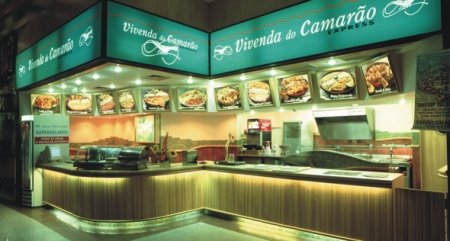
It's a highly awarded fast food chain from Brazil specialized in a variation of prawns and shrimp dishes, a fast growing company that has recently started to develop its overseas market.
Vivenda do Camarao has an International franchise program that provides all the training and market research needed to operate the Food shop.
For further information in the Franchise program please contact the ABCC at abcc@australiabrazil.com.au
Forthcoming Exhibitions and Trade Fairs
Fenasucro - XVI International Sugar and Alcohol industrial Fair
Date: 2 to 5 September 2008
Venue: Zanini Exhibition Center – Sertãozinho / São Paulo / Brazil
Exhibition Area: 130.000 square meters
Number of exhibitors: approximately 450
Estimated number of public visitors: 25.000 visitors
Held by: CEISE: Industry Center of Sertãozinho and Region
Concurrent Events:
International Forum on Ethanol and Alcohol
Brasil Cana Show
STAB’s International Agro-industrial Symposium on Technological Innovations
Source: http://www.fenasucro.com.br/new/uk/default_home.asp
Rio Oil & Gas 2008
Date : September 15-18, 2008
Rio de Janeiro, Brazil
The 2008 edition of the Rio Oil & Gas Expo and Conference will use to advantage
the potential of Riocentro Convention Centre. The exhibition will take place in a
30,500 square meter area, confirming its position among the most important oil & gas
events in the world.
Source: http://www.kallman.com/shows/rio_2008/main.php
Expo Australia 2008, Latin America
Date: 4-6 October
Location: Sao Paulo, Brazil
Expo Australia 2008 will gain maximum exposure for your business by uniting government allies and industry players, including the Council on Australian and Latin American Relations (COALAR), Tourism Australia, Australian Education International and Qantas, under the Brand Australia banner for the largest 100% Australian event in Latin America.
The expo will showcase Australia’s best tourism, food and beverage (with a special emphasis on wine), services, investment and outdoor goods and fashion.
Previously the Australia Festival, the expo generated A$14 million in positive mentions in local media in 2007.
Source: http://www.austrade.gov.au/EventViewBookingDetails.aspx?Bck=Y&EventID=1233
FEILEITE 2008 - 2nd International Fair of the Dairy Production Chain
Date: from October 28 through November 01, 2008
Time: from 09 a.m. to 08 p.m.
Place: Centro de Exposições Imigrantes – SP
Feileite – International Fair of the Dairy Production Chain, by evolving year after year, has been preparing its 2008 edition by investing in new concepts to boost output and reinforce values in order to ensure the space held by milk. Feileite has as its basic premise: strengthening the industry, generating business and improving the production system.
Information: (11) 5067-6767
Source: http://www.fiesp.com.br/portal.htm?http://www.feileite.com.br
The Expo Brazil 2008
20 – 22 November
The International Trade Exhibition to be held in November 2008 is all set to present over 10,000 products, equipment and machinery from over 28 countries. Trade visitors from all over South & North American countries are being invited directly and in collaboration with several regional trade bodies in Brazil, Ecuador, Colombia, Argentina, Chile, Venezuela, Bolivia & other North American Countries. Though Brazil by itself is one of the biggest markets in South America, major emphasis is being laid upon attracting traders and importers from neighbouring countries. In 2007, imports of the country rose to US$98 billion in 10 months, thus making it a very attractive market for foreign exporters.
Source: http://www.expogr.com/brazil/index.html
AmazonTech 2008-07-30
25 – 29 November
The Amazontech 2008 is a ample show with technological innovations, scientific knowledge diffusion with possibility to develop sustainable business; interchange of technical/scientific knowledge on ecologically corrects projects that will make practical the self-sustainable of the Amazon Region.
Source: http://www.amazontech2008.com.br/
EXPO WEC – Energy for the Future
02 – 06 December
Time: 14:00 – 22:00
Place: Convention Center Ulysses Guimaraes – Brasilia/DF
The international exposition to be held in December 2008 will have as subject bioenergy, renewable energy, and alternative sources of energy (including Nuclear energy). It’s a privileged place to promote projects, products and services that will beneficiate our future generations.
Source: http://www.hanover.com.br/feiras_nac/2008/expo_wec/expo_wec.htm
Subscribe to:
Posts (Atom)
